
Best Sivasagar Travel Guide 2026: Ahom Dynasty Heritage Near Jorhat
If your Jorhat-Majuli trip leaves you with an extra day, there’s one place nearby that genuinely deserves it: Sivasagar. Just over an hour from Jorhat, this quiet town was once the capital of the Ahom dynasty, a Tai-Mongoloid kingdom that ruled Assam for nearly 600 years. This Sivasagar travel guide covers everything worth seeing, how to plan your visit, and why this heritage town belongs on every Upper Assam itinerary.
Most travellers heading to Jorhat and Majuli skip Sivasagar entirely, assuming it’s just “more temples and ruins.” That assumption misses something significant. Sivasagar isn’t a scattered collection of old buildings — it’s the largely intact capital of a dynasty that successfully resisted seventeen Mughal invasions and built one of the few Indian kingdoms that outlasted Mughal expansion altogether. This Sivasagar travel guide will show you exactly why that history is worth a detour.
A Brief History of the Ahom Dynasty and Sivasagar
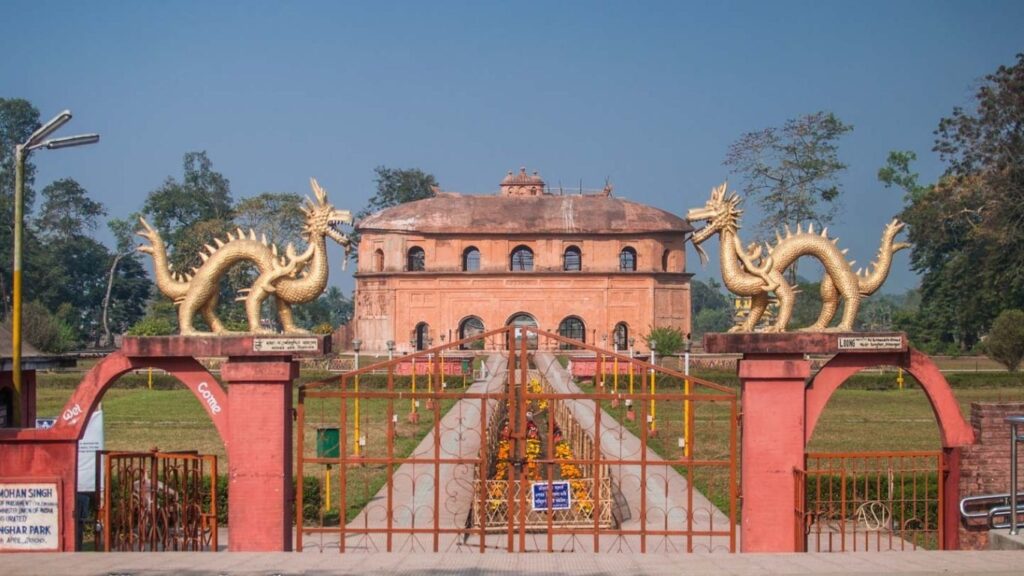
Understanding the backstory makes every monument in this Sivasagar travel guide click into place. The Ahom dynasty traces back to 1228 CE, when a group of Tai people crossed the Patkai Range from present-day Myanmar and settled in the Brahmaputra valley under their founder, Chaolung Sukhapha. Over the next six centuries, the Ahoms built one of Northeast India’s most resilient kingdoms — known for progressive governance, cultural assimilation of local Assamese traditions, and consistent military success against Mughal incursions.
Sivasagar itself, originally called Rangpur, served as the Ahom capital from 1699 to 1788 under a series of powerful kings, most notably Rudra Singha and his successors Siva Singha, Pramatta Singha, and Rajeswar Singha. It was during this roughly 90-year window that the town’s most iconic structures were built. The Ahoms used an indigenous construction technique combining thinly baked bricks with an organic mortar made from sticky rice powder, duck eggs, urad dal, and a local catfish — a method that has kept many of these structures standing for nearly 300 years.
Top Places to Visit in Sivasagar
1. Rang Ghar — Asia’s Oldest Amphitheatre
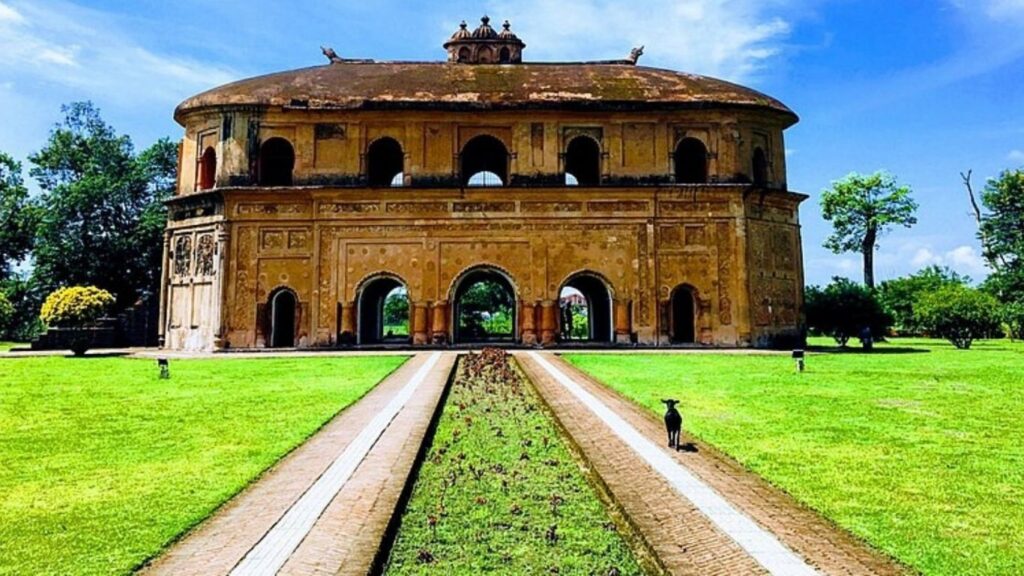
Often called the “Colosseum of the East,” Rang Ghar is the single most photographed monument in this Sivasagar travel guide. Built around 1746 by King Pramatta Singha, this two-storied royal pavilion was used to watch sporting events, including buffalo and elephant fights, as well as cultural performances. Its roof is shaped like an inverted royal boat, complete with carved stone crocodiles at either end — a design unlike anything else in Indian architecture. The lower floor was reserved for commoners, while the upper level was for royalty and high-ranking officials.
2. Talatal Ghar — The Underground Palace
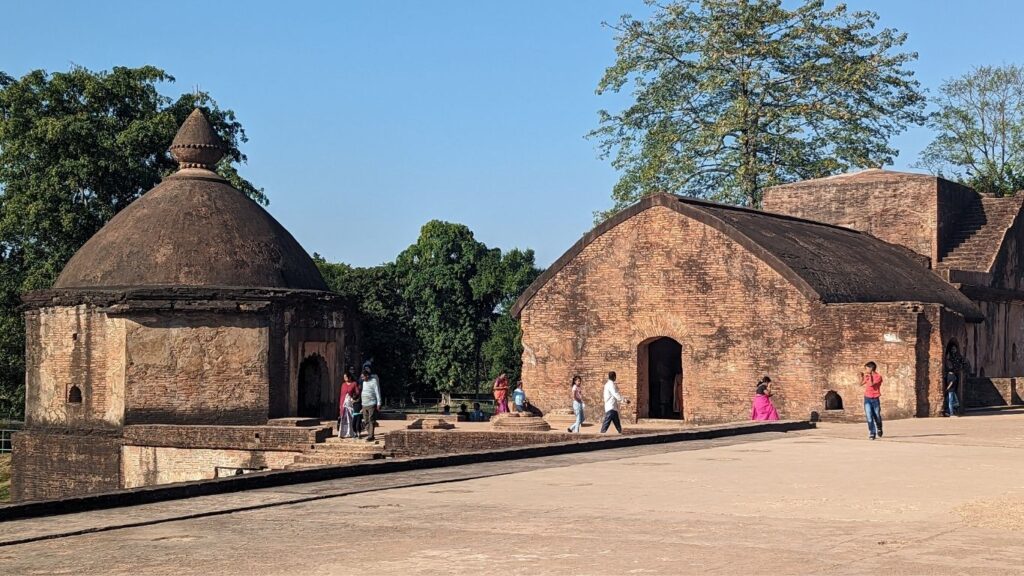
Talatal Ghar, meaning “lower levels,” is a seven-story Ahom palace, three floors of which are underground. Built during the reign of Rajeswar Singha, the palace blends Tai Ahom architectural traditions with Mughal-influenced arched doorways and vaulted ceilings. The underground levels once served as stables, storerooms, and servant quarters, while the royal family occupied the upper floors. Local accounts describe two secret escape tunnels — one roughly 3 km long connecting to the Dikhow River, and another spanning 16 km to Kareng Ghar (Garhgaon Palace) — built as emergency escape routes during enemy attacks. Many of these passages remain closed to the public for safety reasons, but enough is accessible to get a genuine sense of the palace’s scale and strategic design.
3. Sivasagar Tank and Shivadol Temple
The town’s name literally means “ocean of Shiva,” derived from the massive Sivasagar Tank (also called Borpukhuri), built by Queen Ambika, consort of King Siva Singha, in 1734. On its banks stands Shivadol, Assam’s tallest Shiva temple at 104 feet, alongside the Vishnu Dol and Devi Dol temples — together forming one of the most architecturally significant temple complexes in the state. The combination of a massive artificial lake framed by towering, intricately carved temples is the defining image most visitors take away from Sivasagar.
4. Joysagar Tank
At roughly 318 acres, Joysagar is one of the largest man-made tanks in India, built by Rudra Singha — remarkably, completed in just 45 days in 1697. The tank and its surrounding temples, including Jeydol, Shiv Temple, Devi Ghar, and Nati Gosain Temple, span nearly 320 acres altogether, making it a peaceful, less-visited counterpart to the more famous Sivasagar Tank.
5. Charaideo Maidam — The “Pyramids of Assam”
About 28 km from Sivasagar town lies Charaideo, the original capital established by Chaolung Sukhapha around 1229 CE and the final resting place of generations of Ahom royalty. The site’s pyramid-like burial mounds, known as Moidams, were inscribed as India’s 43rd UNESCO World Heritage Site, bringing renewed international attention to Ahom-era heritage. If your Sivasagar travel guide itinerary allows for only one additional stop beyond the main town, this should be it — both for its historical weight and its now-official global recognition.
6. Kareng Ghar (Garhgaon Palace)
Located about 15 km from Sivasagar, Kareng Ghar was built by King Rajeswar Singha and is considered the grandest of all surviving Tai Ahom monuments. The ground floor housed servants and stables, the upper floors held the royal apartments, and an underground tunnel reportedly connects the palace to Talatal Ghar. Four watchtowers once guarded the structure, though only two remain intact today.
The Engineering Secret Behind Sivasagar’s Monuments
One detail most quick travel guides skip entirely is how these structures have survived for nearly 300 years without modern reinforcement. The Ahom builders developed a construction technique that was remarkably advanced for its time, using thinly baked bricks bound together with an organic mortar mixture. This mortar combined sticky rice powder (bora chaul), duck eggs, a pulse called maati maah (urad dal), and a local catfish known as borali mach — an entirely biological binding agent that proved extraordinarily durable in Assam’s humid, flood-prone climate.
This wasn’t a one-off experiment. The same technique appears across nearly every major Ahom structure in Sivasagar, from Rang Ghar to Talatal Ghar to the temple complexes around Sivasagar Tank. The architect most closely associated with the planning of Rangpur (modern Sivasagar) was Ghanashyam Khanikar, brought in by King Rudra Singha specifically from Cooch Behar to design the new capital. Understanding this engineering context adds real depth to a visit — these aren’t just old buildings, they’re physical evidence of a sophisticated, locally-developed construction science that predates most colonial-era infrastructure in the region by over a century.
Shopping and Local Markets in Sivasagar
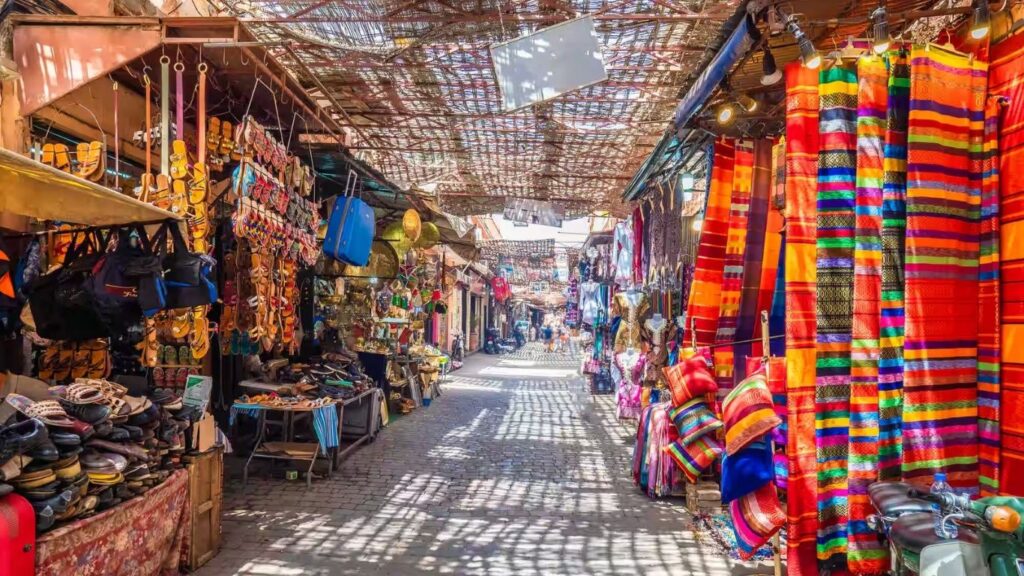
Beyond the monuments, this Sivasagar travel guide would be incomplete without mentioning Panbazar, the town’s central market and the best place to pick up authentic local handicrafts. Mekhela chador, the traditional Assamese women’s garment, is a popular purchase here, alongside cane and bamboo products crafted by local artisans. Unlike more touristy markets elsewhere in India, Panbazar still functions primarily as a working local market, which means prices tend to be more reasonable and the goods more genuinely representative of everyday Assamese craft traditions rather than mass-produced souvenirs.
If you’re interested in textiles specifically, it’s worth asking vendors about the weaving traditions tied to the wider region — many of the same handloom techniques you’d encounter in Mishing villages near Majuli have parallel traditions among Sivasagar’s local weaving communities, just with different motifs and color palettes shaped by Ahom-era aesthetics rather than tribal design language.
How to Reach Sivasagar
- By Air: Jorhat Airport is the nearest, roughly 55–75 km away depending on the source route, with direct flights from Guwahati, Kolkata, Delhi, and Bengaluru. From Jorhat, expect about a one-hour drive by taxi or shared cab.
- By Train: Simaluguri Junction, about 16 km from Sivasagar, connects the town to major Indian cities.
- By Road: Sivasagar is well connected to Guwahati, Jorhat, and Dibrugarh by regular bus and taxi services, making it an easy add-on if you’re already touring Upper Assam.
Best Time to Visit Sivasagar
The ideal window for this Sivasagar travel guide is October to April, when daytime temperatures sit comfortably between 8–28°C, making it pleasant for walking between monuments and tanks. Two festival windows are worth planning around specifically:
- Bohag Bihu (mid-April): Assam’s harvest festival, marked by traditional Bihu dances, music, and feasts across the town.
- Me-Dam-Me-Phi (31 January): A solemn, powerful Tai-Ahom ancestor veneration festival held at Charaideo. Pairing a Charaideo visit with this date frames the site as living heritage rather than simple ruins tourism — best experienced respectfully through a local guide.
Avoid the peak monsoon months (July–September) if possible; while the season enhances the greenery around Joysagar Tank, the increased humidity and slippery monument pathways make sightseeing less comfortable.
Suggested 2-Day Sivasagar Itinerary
Day 1: Arrive and visit Rang Ghar, followed by the Sivasagar Tank and Shivadol Temple complex. Spend the evening browsing Panbazar market for mekhela chador and cane handicrafts.
Day 2: Explore Talatal Ghar in the morning, then take a half-day trip out to Charaideo Maidam. If time allows, fit in Kareng Ghar before heading back, and close the day with a proper Assamese thali featuring masor tenga, khar, and duck curry at a local restaurant like Heritage Khorika.
Connecting Sivasagar to Your Jorhat-Majuli Trip
For travellers already exploring Jorhat and Majuli, Sivasagar fits naturally into a wider Upper Assam circuit: Jorhat (1 night) → Majuli (1 night) → Sivasagar (1 night) → onward to Dibrugarh or back to Guwahati. Since Jorhat sits roughly an hour away, Sivasagar works equally well as a day trip if your schedule is tighter, or as an overnight stop if you want time to properly explore Charaideo without rushing.
Practical Tips for Visiting Sivasagar
- Carry cash. Many smaller shops and local eateries don’t accept cards, and ATM availability can be limited outside the main town.
- Dress modestly at temples. Shivadol, Vishnu Dol, and Devi Dol are active places of worship, not just historical sites.
- Hire a local guide for Charaideo and Talatal Ghar. The underground tunnels and burial customs have layered historical context that’s easy to miss without explanation.
- Try local Assamese food while you’re here. Sivasagar’s food scene echoes Jorhat’s — don’t skip masor tenga, khar, or duck curry at a local restaurant.
Why the Ahom Legacy Still Matters Today
What makes Sivasagar more than a checklist of old buildings is the broader story behind why the Ahom dynasty managed to rule for nearly six centuries — longer than most Indian kingdoms of the medieval period, and notably one of the very few regional powers in the subcontinent that the Mughal Empire never fully conquered. Each major monument in Sivasagar connects to a specific phase of this resistance and consolidation.
Under Pratap Singha in the early 17th century, the kingdom’s administrative backbone was built, including the offices of Borbarua and Borphukan, which allowed the Ahom state to scale and govern effectively across a wide and difficult terrain. A few decades later, Chakradhwaj Singha appointed the legendary commander Lachit Borphukan, whose military leadership at the Battle of Saraighat remains one of Assam’s most celebrated historical narratives — a decisive Ahom victory against Mughal naval forces on the Brahmaputra. This resistance set the stage for the later golden era under Rudra Singha and his successors, whose building projects are what most visitors actually see today in Sivasagar.
This layered history is part of why local guides and historians increasingly frame Charaideo and Sivasagar not as static ruins, but as a living thread connecting contemporary Assamese identity to centuries of self-governance and resilience. Walking through Talatal Ghar or standing beside the Charaideo Moidams carries a different weight once you understand that these structures represent one of the only sustained, successful resistances to Mughal expansion anywhere in India.
Frequently Asked Questions
1. How many days are needed to explore Sivasagar properly? Two days is comfortable for covering the main town monuments along with a half-day trip to Charaideo Maidam, though a focused one-day visit can still cover Rang Ghar, Talatal Ghar, and the Sivasagar Tank complex.
2. Is Sivasagar worth visiting if I’m already going to Jorhat and Majuli? Yes — Sivasagar is roughly an hour from Jorhat and offers a completely different experience centered on Ahom dynasty heritage, complementing the river-island and wildlife focus of Jorhat and Majuli.
3. What is Charaideo Maidam and why is it significant? Charaideo Maidam is a UNESCO World Heritage Site featuring pyramid-like royal burial mounds of the Ahom dynasty, often referred to as the “Pyramids of Assam,” located about 28 km from Sivasagar town.
4. Is Talatal Ghar fully open to visitors? Most of the above-ground structure and several underground levels are accessible, though some of the deeper tunnel passages remain closed to the public for safety reasons.
5. What is the best time of year to visit Sivasagar? October to April offers the most comfortable weather for sightseeing, with the Bohag Bihu festival in mid-April and Me-Dam-Me-Phi on 31 January offering particularly rich cultural experiences.
6. Are there good food options in Sivasagar? Yes, Sivasagar shares Upper Assam’s culinary strengths, with local restaurants like Heritage Khorika serving traditional dishes such as masor tenga, khar, pitha, and duck curry.
7. How do I get from Sivasagar to Charaideo Maidam? Charaideo is roughly a 30-minute drive from Sivasagar town, easily arranged through a local taxi or as part of a guided day tour.
Conclusion
Sivasagar doesn’t get the same spotlight as Majuli or Kaziranga, but it arguably tells the most complete story of who shaped Upper Assam’s history in the first place. Between Rang Ghar’s theatrical architecture, Talatal Ghar’s underground intrigue, and Charaideo’s newly UNESCO-recognized burial mounds, this Sivasagar travel guide should make a strong case for adding at least a day to your Jorhat-Majuli itinerary. Six centuries of Ahom history, much of it still standing, is not something most travellers get to walk through casually — and Sivasagar offers exactly that.