
Majuli Homestay Best Guide 2026 Live with the Mishing Tribe
Most visitors to Majuli stop at the Satras, take a few photos, and head back to Jorhat by evening. That’s a mistake. The real reason to visit this river island isn’t the sightseeing — it’s the chance to stay in a Majuli homestay and experience daily life with the Mishing tribe, one of Assam’s most distinctive indigenous communities. This guide covers exactly what that experience looks like, the best homestays to book, what it costs, and how to do it respectfully.
There are no luxury hotels on Majuli. Genuinely. The island has fewer than 80 high-quality rooms in total, spread across guest houses, eco-resorts, and tribal homestays. This isn’t a gap in tourism infrastructure — it’s the entire point of visiting. A Majuli homestay is not a downgrade from a hotel; it’s the actual experience people come here for.
Who Are the Mishing People?
Before booking a Majuli homestay, it helps to understand who you’ll be staying with. The Mishing (also spelled Mising) are an indigenous Tibeto-Burmese ethnic group, primarily settled in Assam and parts of Arunachal Pradesh. Their name roughly translates to “man of the earth,” and their entire way of life is built around the rhythms of the Brahmaputra River and its floodplain.
The Mishing traditionally worship the Sun (Do:nyi) and Moon (Polo), and most of their rituals, songs, and offerings are tied directly to planting and harvest cycles. Their society is organized around the Dolung Kebang, or village council, which still plays a central role in resolving disputes and preserving customary law. Despite the pressures of modernization, weaving cooperatives, traditional festivals, and the Mising language are actively being preserved by institutions like the Mising Agom Kébang.
Why Stay in a Majuli Homestay Instead of a Hotel
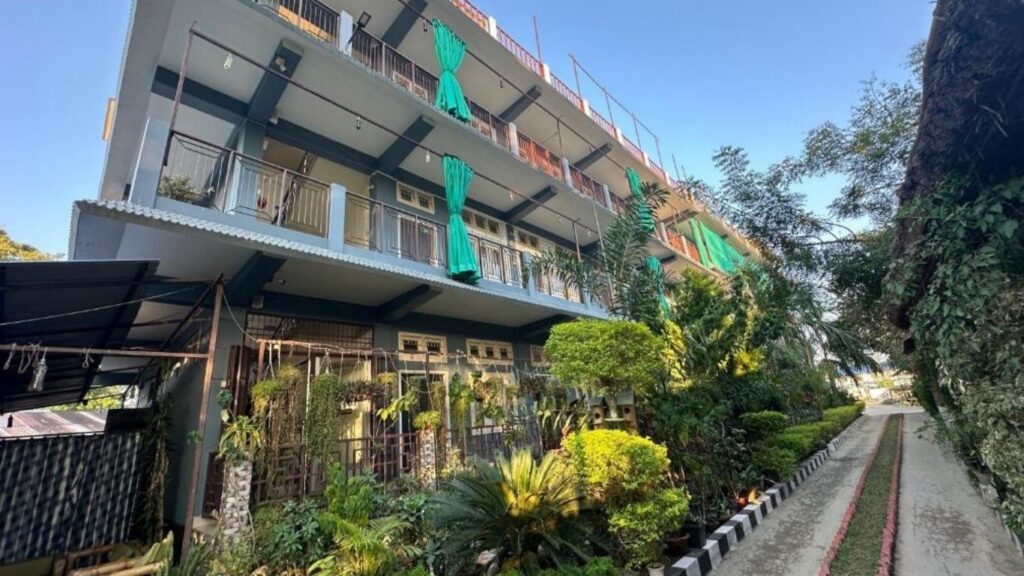
A Majuli homestay gets you closer to three things a conventional hotel simply can’t offer:
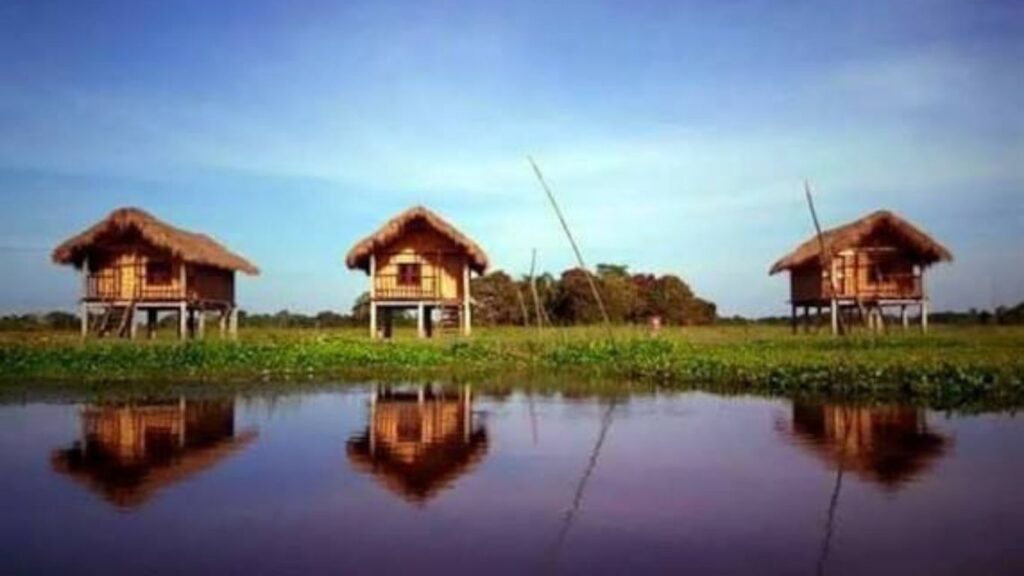
- Chang ghar architecture — traditional Mishing homes are built on bamboo stilts, typically five to six feet above the ground, an ingenious adaptation to the island’s annual flooding. Staying in one means living, even briefly, inside a structure engineered by generations of practical wisdom.
- Home-cooked Mishing cuisine — meals like Porag aapin (rice cooked inside a leaf called tora pat), smoked fish, and sticky rice wrapped in banana leaves, often shared communally rather than served separately.
- Direct economic support — booking a homestay puts your money directly into the hands of Mishing families, rather than larger hotel chains or intermediaries, which matters enormously on an island that is, quite literally, losing land to the river every year.
Best Majuli Homestays to Book in 2026
La Maison de Ananda (Kamalabari)
The island’s most established guest house, originally built by a French architect named Jim Chauvin in 2005, who fell in love with Majuli and constructed what became the island’s first proper tourist accommodation. It’s now run by Manjit Risang and his family, who also operate the well-known Risang’s Kitchen on-site. The property has eight bamboo cottages accommodating up to 16 people. This is considered the cultural hub of the island — local fixers, mask-makers, and Satra heads regularly pass through.
What makes it special: Risang’s Kitchen serves an authentic traditional Mishing meal, including apong, the home-brewed Mishing rice beer, available in two varieties — poro (sweet) and nokjin (sour). A vegetarian meal costs around ₹100 per person, non-vegetarian around ₹300, with chicken or pork cooked in bamboo pipes available for an extra ₹100. Rice beer needs to be ordered in advance since it takes time to brew.
Risong Family Guest House
For travellers who want a deeper rural immersion than even La Maison offers, Risong Family Guest House delivers authentic tribal hospitality in a genuine village setting — home-cooked Assamese meals, bamboo verandah sunrises over the river, and communal kitchen evenings shared with rice beer.
Okegiga Homes
A more contemporary option for travellers who still want privacy and modern comfort while staying deep in the rural heartland. It blends sustainable, local eco-materials with boutique-style amenities, making it a good middle ground for those new to homestay-style travel.
Majuli Homestay (Tourism Tiniali, Kamalabari)
Run by host Rumi Hazarika, this well-maintained traditional home sits on the way to Auniati Satra, about 3.7 km from Kamalabari Ferry Terminal. Guests can participate in cooking traditional recipes with Rumi’s permission, and the property offers birdwatching, village walks, and stargazing. It’s roughly 45 km from Jorhat and 178 km from Kaziranga National Park, making it a workable base if you’re combining destinations.
The Ideal Majuli Homestay Itinerary
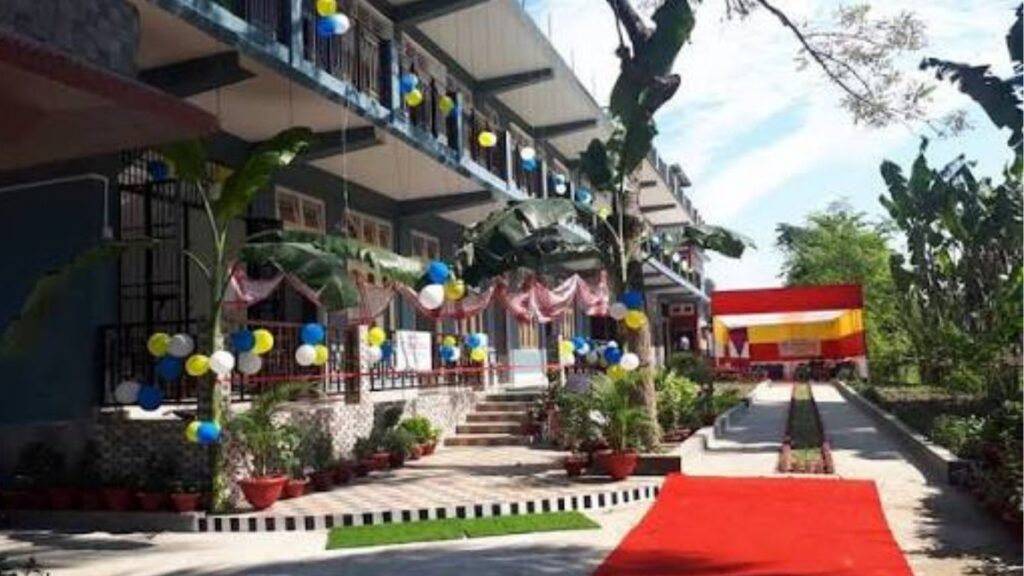
A pattern that experienced Majuli travellers consistently recommend: two nights at a more established property like La Maison de Ananda, followed by two nights at a Risong-style family homestay. The first stay gives you cultural orientation and context; the second gives you the unfiltered village rhythm. Majuli isn’t built for rushed sightseeing — it rewards slowing down.
Day 1–2: Cultural Orientation
Settle in, visit the Satra circuit — Auniati Satra (founded in 1653, home to ancient Sankardeva-era manuscripts) and Samaguri Satra, the world centre of Bhaona mask-making. Hereditary mask-makers welcome visitors and sell small handcrafted pieces directly, typically between ₹500–2,000. Always have your homestay host call ahead, since Satras are active religious institutions, not museums set up for tourist drop-ins.
Day 3–4: Mishing Village Immersion
Walk through a Mishing village, observe traditional handloom weaving (nearly every household has a loom), and if your visit coincides with a festival, you may witness traditional dances like Gumraag performed in full traditional attire. Spend an evening sharing a meal and apong with your host family under the stars — this, more than any single sight on the island, is what people remember most.
How to Book a Majuli Homestay
Most Majuli homestay properties sit outside global hotel booking networks. The most reliable way to book is to call or message ahead directly via WhatsApp, often coordinated through Mishing-community fixers or your Jorhat hotel. Booking directly, rather than through a third-party platform, ensures your money supports the community without an intermediary cut — on an island actively fighting environmental and economic pressure, this matters more than it might elsewhere.
A practical strategy many travellers use: stay overnight in Jorhat before and after the river crossing, and arrange your Majuli homestay separately and directly.
Best Time to Visit for a Majuli Homestay Experience
The best window is October through March, when the weather is dry and pleasant and ferry services run reliably. If cultural immersion is your priority, consider timing your trip around two major Mishing festivals:
- Ali-Ai-Ligang (February–March): The Mishing tribe’s most important festival, marked by traditional dances, music, and an elaborate spread of ethnic cuisine — widely considered the richest time to experience Mishing culture firsthand.
- Ras Mahotsav (November, full moon): A major Vaishnavite festival centered on the Satras, but also an opportunity to witness Mishing cultural performances happening alongside it.
Avoid the monsoon months (July–September), when the Brahmaputra swells significantly, often disrupting both ferry access and daily village life.
Etiquette for a Respectful Majuli Homestay Stay
- Don’t ask for a discount. What you pay for a homestay brings direct socio-economic benefit to a local family — treat the price as a meaningful contribution, not a starting point for negotiation.
- Ask before photographing rituals or homes. Respect for privacy matters more here than in conventional tourist destinations.
- Support local weavers directly. Buying a handwoven shawl, gamosa, or mekhela chador isn’t just a souvenir — it’s a livelihood that’s increasingly hard to sustain given seasonal flooding and land loss.
- Avoid plastic bottles and single-use items. Majuli’s ecosystem is fragile, and mindful travel genuinely helps preserve both the land and the culture built around it.
- Inform your host in advance for rice beer or special meals. Apong takes time to brew, and traditional meals like a full Mishing thali are often prepared specifically on request.
Understanding Chang Ghar: The Architecture Behind Every Majuli Homestay
One detail that makes a Majuli homestay stand apart from conventional accommodation anywhere else in India is the chang ghar itself — the traditional stilted bamboo house that almost every Mishing family lives in. These homes typically sit five to six feet above the ground, supported entirely by bamboo and cane construction, with no concrete or steel involved in the traditional versions.
This isn’t a stylistic choice. It’s a direct, practical response to a landscape that floods almost every year. The elevation protects the living space, the kitchen, and stored grain from rising water, while the open structure underneath allows floodwater to pass through rather than push against the home. Even newer houses built with brick and cement on the island are still constructed on raised platforms, a sign of how deeply this engineering logic has shaped local building practice regardless of materials.
Inside a typical chang ghar, you’ll usually find a single large room divided by woven bamboo partitions, with a central cooking area where most family life actually happens. Staying in one, even for a few nights, gives you a genuine sense of how an entire community has organized its domestic life around an unpredictable river — something no photograph of the structure from the outside can really convey.
What to Pack for a Majuli Homestay Stay
Since most homestays are simple, family-run properties rather than fully serviced hotels, a little preparation goes a long way:
- A torch or headlamp — power supply on the island can be inconsistent, especially in more remote village homestays.
- Mosquito repellent — the riverine environment means insects are a constant presence, particularly around dusk.
- Cash in smaller denominations — most homestays operate on a cash basis, and card or UPI payments aren’t reliably available, especially in family-run village settings.
- A light shawl or jacket for winter visits — early mornings between December and February can get surprisingly cool on the open river island.
- A reusable water bottle — given the emphasis on avoiding single-use plastic, refillable bottles are both more practical and more respectful of the local environment.
- Basic toiletries — don’t expect hotel-style amenities; bring your own essentials.
A Typical Day During a Majuli Homestay Stay
To set realistic expectations, here’s roughly what a day in a Majuli homestay actually looks like, based on patterns described by repeat visitors and homestay hosts:
Early morning: Most chang ghars wake with the river mist still hanging low over the fields. Tea is usually the first thing offered, often followed by a simple breakfast — boiled eggs, fruit, and bread, or a more traditional rice-based dish depending on the host family.
Mid-morning: This is typically when village walks happen, since the light is good and the day’s heat hasn’t set in yet. Hosts or local guides often lead guests through the village, pointing out handloom weaving in progress, introducing neighbors, and explaining daily routines that rarely make it into guidebooks.
Afternoon: A heavier traditional meal is usually served around midday — rice, vegetables, and fish or meat, often cooked in banana leaf or bamboo. Afternoons tend to be unstructured and slow by design; this is when many guests simply sit on the bamboo verandah, read, or talk with their hosts.
Evening: As the light softens, sunset over the Brahmaputra becomes the unofficial centerpiece of the day. Many homestays end the evening with a communal dinner, sometimes accompanied by apong if it’s been arranged in advance, and occasionally informal music or storytelling if the household is in the mood to share it.
This unhurried rhythm is, more than any single attraction, the actual product a Majuli homestay is selling — and it’s worth structuring your visit around that reality rather than trying to pack the island full of sightseeing stops.
Frequently Asked Questions
1. Is it safe to stay in a Majuli homestay as a foreign tourist? Yes. Majuli homestays are well-established for tourism, and hosts like those at La Maison de Ananda and Majuli Homestay regularly host international guests with no special permits required.
2. How much does a Majuli homestay typically cost? Meals at homestays like Risang’s Kitchen range from around ₹100 for vegetarian to ₹300 for non-vegetarian per person, with overall stay costs at most properties falling in the budget-to-mid-range category, generally far lower than mainland Assam hotels of comparable comfort.
3. Can I cook or learn recipes during my Majuli homestay stay? At several homestays, including the one run by host Rumi Hazarika, guests can participate in cooking traditional recipes with the host’s permission — a great way to deepen the experience beyond simply eating the food.
4. What is apong and is it easy to find at a Majuli homestay? Apong is a traditional Mishing rice beer available in sweet (poro) and sour (nokjin) varieties. It’s commonly available at homestays but typically needs to be requested a day or two in advance since brewing takes time.
5. How far is a typical Majuli homestay from the ferry terminal? Most homestays sit within 4–5 km of Kamalabari Ghat, the main ferry terminal connecting Majuli to Nimati Ghat in Jorhat, making them easily reachable by local transport upon arrival.
6. Is Majuli homestay tourism disappearing due to erosion? Majuli is genuinely losing land to the Brahmaputra River each year, which makes responsible, direct-booking tourism even more meaningful — supporting Mishing families now helps sustain a culture and way of life under real environmental pressure.
7. Do Majuli homestays offer both vegetarian and non-vegetarian food? Yes, nearly all homestays offer both options, with traditional non-vegetarian meals typically including fish, chicken, or pork prepared in bamboo pipes or wrapped in banana leaves.
Conclusion
A Majuli homestay isn’t simply a place to sleep between sightseeing stops — it’s the most direct way to understand why this river island holds such a singular place in Assam’s cultural identity. Between the chang ghar architecture, the home-cooked Mishing cuisine, and the genuine warmth of families like the Risangs and Hazarikas, staying with the Mishing community turns a checklist trip into something considerably more memorable. Book directly, stay longer than you initially plan to, and let the island’s slower rhythm set the pace.
For more on Majuli’s cultural heritage and travel planning, check the Assam Tourism official website and the Sahitya Akademi’s resources on Sankardeva and Vaishnavite culture for deeper background on the Satra tradition.