
Best AI Tools for Small Business in 2026: The Complete Guide to Growing Faster with Less
If you run a small business in 2026, you’ve probably already noticed the shift. Everyone around you — competitors, vendors, even your accountant — seems to be talking about AI tools for small business and how they’re using them to save time, cut costs, and grow faster. This isn’t just hype. Adoption of AI tools for small business has moved from “nice to have” to “how do you even compete without it.” In this guide, we’ll walk through exactly which actually deliver results, how to pick the right ones for your specific situation, and how to avoid wasting money on tools that look shiny but don’t move the needle.
Whether you’re a solo founder, a five-person startup, or a growing local business with a small team, this guide is written for you. We’ll keep things practical, avoid unnecessary jargon, and focus on what actually works right now.
Why AI Tools for Small Business Matter More Than Ever in 2026
A few years ago, AI was mostly a buzzword reserved for big tech companies with massive budgets. That’s completely changed. Today, are affordable, easy to set up, and often require zero technical background. A small bakery can use AI to manage inventory. A one-person marketing agency can use AI to draft client reports in minutes. A local law firm can use AI to summarize case documents that used to take hours to read.
The reason this matters so much right now is competitive pressure. When your competitors adopt AI tools for small business and you don’t, they move faster, respond to customers quicker, and operate at a lower cost. That gap compounds over time. Falling behind on AI tools for small business adoption isn’t just a missed opportunity anymore — it’s a real business risk.
Categories of AI Tools for Small Business You Should Know
Before jumping into specific recommendations, it helps to understand the broad categories of AI tools for small business available today. Most tools fall into one of these buckets:
- Customer service and support — chatbots, automated ticket routing, AI-powered FAQ systems
- Marketing and content creation — social media captions, blog drafts, ad copy, email sequences
- Sales and lead generation — lead scoring, follow-up automation, CRM enrichment
- Operations and admin — scheduling, invoicing, inventory management, bookkeeping
- Data analysis and reporting — dashboards, forecasting, customer insights
Understanding these categories will help you figure out where AI tools for small business can create the most value for your specific operation, rather than adopting tools randomly because they’re trending.
Top AI Tools for Small Business in 2026
Let’s get into specifics. Here are the categories of AI tools for small business owners are actually using this year, along with what to look for in each.
1. AI Chatbots for Customer Support

Customer support is one of the easiest places to see immediate ROI from AI tools for small business. A well-configured chatbot can handle 60-80% of routine questions — order status, refund policy, business hours — without a human ever getting involved. This frees up your team to handle complex issues that actually need a human touch.
When evaluating chatbot-style AI tools for small business, look for:
- Easy integration with your existing website or app
- The ability to train the bot on your own documents and FAQs
- A smooth handoff to a human when the bot can’t help
2. AI Content and Marketing Assistants

Content creation used to be one of the biggest time sinks for small business owners. Writing blog posts, social captions, email newsletters — it all adds up. Modern AI tools for small business marketing have made this dramatically faster. You can generate a first draft of a blog post, a week of social captions, or an email sequence in minutes, then edit for your brand voice.
The key here is not to publish AI content blindly. The businesses winning with AI tools for small business marketing are the ones using AI for the first draft, then adding their own expertise, stories, and personality on top. Generic AI content performs poorly; personalized, edited AI content performs well.
3. AI for Sales and Lead Follow-Up
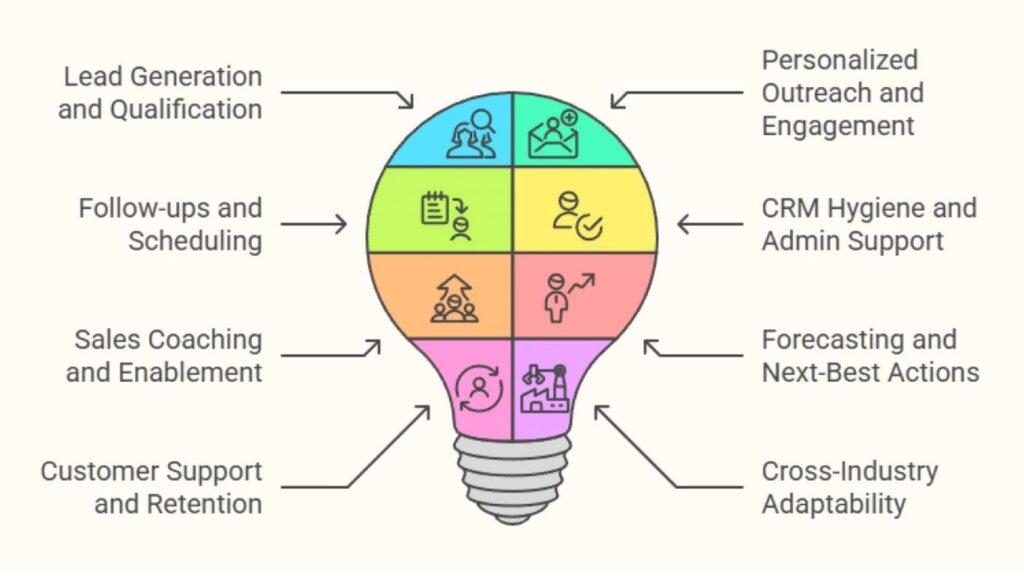
Missing a follow-up with a warm lead is one of the most common (and costly) mistakes small businesses make. This is exactly where AI tools for small business sales automation shine. These tools can automatically follow up with leads, score them based on engagement, and alert your sales team when someone is ready to buy.
If you’re a service-based business — consultants, agencies, freelancers — this category of AI tools for small business can be the difference between a lead going cold and a lead converting into a paying client.
4. AI for Bookkeeping and Financial Management
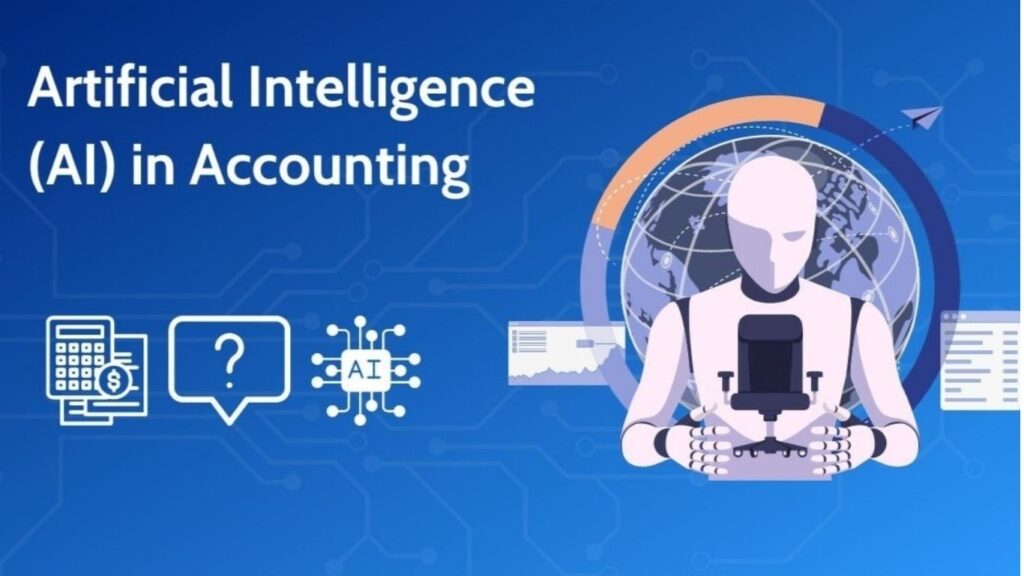
Bookkeeping is tedious, and errors are costly. AI tools for small business finance now handle categorizing expenses, flagging anomalies, generating cash flow forecasts, and even preparing tax-ready reports. This doesn’t replace your accountant, but it drastically cuts down the manual work both of you have to do.
5. AI for Scheduling and Operations
If you run any kind of service business — salons, clinics, consultants, contractors — scheduling can eat hours of your week. AI tools for small business scheduling assistants can manage bookings, send reminders, handle rescheduling requests, and even predict no-shows based on patterns.
How to Choose the Right AI Tools for Small Business
With so many options available, picking the right AI tools for small business can feel overwhelming. Here’s a simple framework to narrow things down:
Start with your biggest time drain. Look at where you and your team spend the most repetitive, low-value hours each week. That’s usually the best starting point for AI tools for small business adoption.
Prioritize ease of setup. As a small business, you don’t have an IT department. The best AI tools for small business are the ones you can set up yourself in an afternoon, not the ones that require a developer.
Check for real customer support. Even the best AI tool will run into edge cases. Make sure the vendor offers responsive support, not just a chatbot of their own.
Start with one tool, not five. A common mistake is trying to adopt too many AI tools for small business at once. Pick one, get it working well, measure the results, then expand.
Look at pricing that scales with you. Many AI tools for small business offer free or low-cost starter tiers. Don’t overcommit to an expensive annual plan before you’ve proven the tool works for your specific business.
Common Mistakes Small Businesses Make with AI Tools
Not every attempt to use AI tools for small business succeeds. Here are the most common pitfalls:
- Adopting AI without a clear goal. Tools bought “because everyone else has one” rarely get used properly.
- Ignoring data privacy. Some AI tools for small business require access to customer data — always check how that data is stored and used.
- Over-automating customer interactions. Customers still want a human option. The best use of AI tools for small business supports your team, it doesn’t replace all human contact.
- Not training the team. Even simple AI tools for small business need a short onboarding session so your staff actually uses them correctly.
The ROI of AI Tools for Small Business
The real question every small business owner asks is: is it worth it? Based on how businesses are using AI tools for small business in 2026, the answer is overwhelmingly yes — but only when implementation is thoughtful. Businesses that treat AI tools for small business as a strategic investment, not just a trendy purchase, typically see time savings within the first month and measurable cost reduction within the first quarter.
The businesses that struggle with AI tools for small business are usually the ones expecting AI to be a magic fix without putting in the setup work. Like any tool, results depend on how well it’s implemented.
Getting Started: A Simple 30-Day Plan
If you’re ready to bring AI tools for small business into your operation, here’s a simple plan:
Week 1: Identify your top time drain and research 2-3 AI tools for small business that address it. Week 2: Set up a free trial or low-cost plan and test it on a small scale. Week 3: Train your team and gather feedback on what’s working and what isn’t. Week 4: Review results, measure time or cost saved, and decide whether to expand usage or try a different tool.
This gradual approach keeps risk low while still letting you benefit from AI tools for small business quickly.
Industry-Specific Use Cases for AI Tools for Small Business
Different industries get value from AI tools for small business in different ways. Let’s break down a few real-world scenarios so you can see exactly where these tools fit into your own operation.
Retail and e-commerce: Small online stores use AI tools for small business to write product descriptions, personalize email recommendations, and predict which items are likely to run out of stock. This reduces both wasted inventory and lost sales from stockouts.
Restaurants and cafes: Local food businesses use for demand forecasting — predicting how much stock to order based on weather, day of week, and local events — as well as automated review responses across platforms like Google and Yelp.
Healthcare and clinics: Small clinics use AI tools for small business to handle appointment reminders, reduce no-shows, and summarize patient intake forms before a visit, saving front-desk staff significant time each day.
Professional services (legal, accounting, consulting): These businesses use AI tools for small busines to draft first versions of contracts, summarize long documents, and automate routine client communication, freeing up billable hours for higher-value work.
Real estate: Agents use AI tools for small business to draft property listings, answer common buyer questions instantly, and follow up with leads who viewed a property but didn’t respond right away.
Seeing how other businesses in similar industries are usings can help you identify which use case applies most directly to your own daily operations.
Measuring Success After Adopting AI Tools for Small Business
Once you’ve implemented AI tools for small business, it’s important to actually measure whether they’re working. Too many business owners adopt a tool, feel good about “using AI,” and never check whether it’s actually saving time or money. Here are a few practical metrics to track:
- Time saved per week — compare how long a task took before and after using the tool
- Cost per lead or cost per customer — especially relevant for sales and marketing-focused AI tools for small business
- Customer satisfaction scores — make sure automation isn’t hurting the customer experience
- Error rates — for bookkeeping or data-related , fewer mistakes should be a visible outcome
- Team adoption rate — a tool that isn’t being used consistently by your staff isn’t delivering value, no matter how good it looks on paper
Reviewing these metrics monthly ensures your investment in AI tools for small business is actually paying off, rather than just sitting unused after the initial excitement wears off.
The Future of AI Tools for Small Business
Looking ahead, AI tools for small business are only going to become more capable and more affordable. We’re already seeing a shift toward “agentic” tools — AI that doesn’t just answer questions but can actually complete multi-step tasks on its own, like booking a vendor, updating a spreadsheet, and sending a confirmation email, all without manual input at every step.
For small business owners, this means the gap between large enterprises and small operations continues to shrink. A two-person business can now automate workflows that used to require an entire back-office team. The businesses that stay curious, keep testing new and adapt as the technology matures will be the ones with the biggest competitive edge over the next few years.
Conclusion
AI tools for small business are no longer optional extras — they’re becoming a core part of how competitive small businesses operate in 2026. Across customer support, marketing, sales, bookkeeping, and daily operations, the right can save hours every week and cut costs that used to require hiring extra staff. The good news is you don’t need a big budget, a technical team, or months of setup to get started.
The path forward is simple: pick the one task eating up most of your time, choose a single tool built for AI tools for small business use cases, test it for 30 days, and measure the results before scaling up. Businesses that treat this as a gradual, goal-driven process consistently see better outcomes than those chasing every new trend at once. Start small, stay consistent, and let compound into a real, lasting advantage for your company.
Frequently Asked Questions
1. Are AI tools for small business expensive to set up? Most AI tools for small business offer free trials or low-cost starter plans, so you can test before committing to a bigger budget.
2. Do I need technical skills to use AI tools for small business? No. Most modern AI tools for small business are designed for non-technical users with simple, guided setup processes.
3. Which AI tools for small business give the fastest ROI? Customer support chatbots and content creation assistants tend to show the fastest, most visible time savings.
4. Is my customer data safe with AI tools for small business? It depends on the vendor. Always check the tool’s data privacy policy before connecting customer information.
5. Can AI tools for small business replace my employees? No. The best results come from using AI to support your team, not to replace human judgment and personal customer relationships.
6. How many AI tools for small business should I use at once? Start with just one. Adopting too many at once makes it hard to measure what’s actually working.
7. Do AI tools for small business work for local, non-tech businesses? Yes. Salons, clinics, restaurants, and contractors are among the fastest-growing adopters of these tools.
8. How do I know if an AI tool is worth the subscription cost? Track time saved or errors reduced over a 30-day trial period before committing to an annual plan.
9. What’s the biggest mistake businesses make with AI tools for small business? Adopting a tool without a clear goal, or trying to implement too many tools at once without proper training.
10. Will AI tools for small business keep evolving fast? Yes. This space is moving quickly, so it’s worth revisiting your toolset every few months to make sure you’re still using the best options available.