
Kaziranga National Park 2026: Reopening Date, Latest Rhino Count & Complete Planning Guide
If you’ve been trying to plan a Kaziranga trip recently and noticed bookings aren’t opening, here’s why: Kaziranga National Park closed its gates on May 29, 2026, slightly later than the usual May 1 closing date, due to extended demand from tourists and resort operators. The park now enters its annual monsoon shutdown and won’t reopen until the Brahmaputra floodwaters recede later this year.
This guide covers everything you need to know about Kaziranga National Park in 2026 — the reopening timeline, the latest rhino and tiger numbers, safari costs, and how to plan ahead so you’re not scrambling for bookings once the gates open again.
Why Kaziranga National Park Closes Every Year
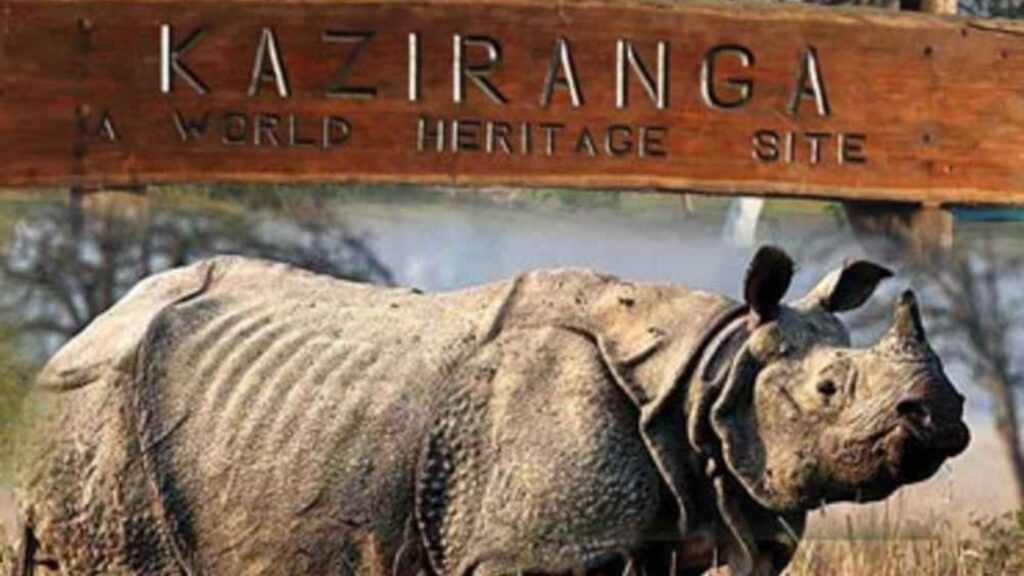
Kaziranga National Park sits directly on the floodplain of the Brahmaputra River. During the monsoon (roughly June to September), the river swells dramatically, submerging up to 90% of the core park area in a bad year. This isn’t a minor inconvenience — it’s an ecological cycle the park’s wildlife actually depends on, since the floods replenish the grasslands and wetlands that sustain its famous one-horned rhinoceros population.
To protect both visitors and animals, Kaziranga National Park authorities shut down all safari operations — jeep and elephant — every year during this window. In 2026, the closing date was pushed from the usual May 25 to May 29, after tourism stakeholders, including the Kaziranga National Park Hotel and Resort Association, requested a short extension due to high visitor demand.
When Does Kaziranga National Park Reopen in 2026?
Historically, Kaziranga National Park reopens around October 1 each year, once the post-monsoon restoration of roads and safari tracks is complete. In some recent years, authorities have pushed for an earlier reopening — even before Durga Puja — specifically to capture festival-season tourist demand. Based on this pattern, travellers planning a 2026 visit should expect the park to reopen sometime between late September and early October, with the exact date typically confirmed by the Eastern Assam Wildlife Division about 2–3 weeks in advance.
Practical tip: Don’t book flights or hotels around early October until the official reopening date is confirmed, since the date can shift by a few days depending on flood recovery and road conditions inside the park.
Latest Rhino and Wildlife Numbers (2026 Update)
One thing that makes Kaziranga National Park worth the wait every year is the sheer scale of its wildlife recovery story. The most recent rhino census recorded 2,613 Greater One-Horned Rhinoceros — the highest count ever, and roughly two-thirds of the entire global wild population of the species.
Beyond rhinos, here’s what the park currently holds:
- Tigers: Over 100 individuals, with densities exceeding 30 per 100 sq km in parts of the core zone — among the highest tiger densities recorded anywhere in the world.
- Asiatic elephants: Over 1,200 wild elephants moving seasonally between the floodplain and the Karbi hills.
- Wild water buffalo: Over 2,500 individuals, the largest wild population of the species anywhere on Earth.
- Eastern swamp deer: Around 1,000 individuals, found almost exclusively in this single landscape.
- Birdlife: A record 105,540 waterbirds across 107 species were recorded in the most recent winter waterbird estimation, reaffirming Kaziranga’s status as a major stop on the Central Asian Flyway.
The park has also recently approved its sixth area expansion, adding roughly 47,306 hectares to strengthen biodiversity conservation, with ten nearby villages excluded from the expansion zone.
A Brief History of Kaziranga National Park
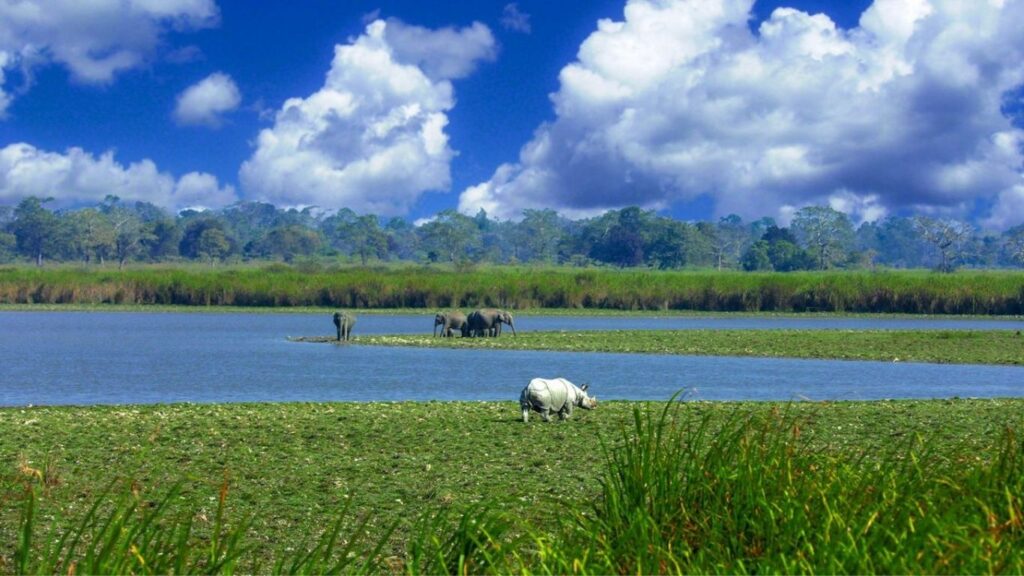
To understand why Kaziranga National Park matters so much to global conservation, it helps to know where it started. The story begins in 1904, when Mary Curzon, wife of the Viceroy of India, visited the region hoping to see the Indian rhinoceros and failed to spot a single one. Alarmed by how close the species had come to disappearing, she urged her husband, Lord Curzon, to act. By June 1905, the Kaziranga Proposed Reserve Forest was created, covering just 232 sq km.
What followed over the next century is one of the most remarkable wildlife recovery stories anywhere in the world. The reserve was renamed Kaziranga Wildlife Sanctuary in 1950, upgraded to a full National Park in 1974, and inscribed as a UNESCO World Heritage Site in 1985. It was declared a Tiger Reserve in 2007, cementing its status as one of the few places on the planet where five major large mammal species — rhino, tiger, elephant, wild water buffalo, and swamp deer — coexist in a single, relatively compact landscape.
From an estimated rhino population of just 12 individuals at the turn of the 20th century, Kaziranga National Park now protects over 2,600 of them. That trajectory alone explains why wildlife researchers, conservationists, and casual travellers alike keep returning to this stretch of the Brahmaputra floodplain.
Understanding the Park’s Safari Ranges
One detail most quick-glance guides skip is that Kaziranga National Park isn’t a single uniform area — it’s divided into distinct ranges, and choosing the right one can significantly change what you see.
Kohora (Central) Range: This is the most visited and most developed range, offering the highest density of rhino sightings along with reasonably good infrastructure. If it’s your first visit, this is usually the recommended starting point.
Bagori (Western) Range: Known for being more open and grassy, Bagori tends to offer better odds for spotting tigers and elephants, along with excellent rhino visibility in the early morning hours.
Burapahar (Western Extension) Range: A quieter, less crowded range with forested terrain, better suited to birdwatchers and visitors who prefer a slower-paced, more intimate safari experience.
Agaratoli (Eastern) Range: Less frequented by tourists, Agaratoli borders wetlands that attract significant birdlife, particularly during winter migration season, making it a strong choice for serious birders.
If you only have time for one safari, Kohora or Bagori are the safest bets for guaranteed rhino sightings. If you can fit in two ranges across your trip, pairing Kohora with Burapahar or Agaratoli gives you a more complete picture of what Kaziranga National Park has to offer beyond the headline species.
Weather and Climate Through the Year
Kaziranga National Park’s open season (October to April/May) itself splits into distinct micro-seasons worth knowing about:
- October–November: Post-monsoon recovery period. Grasslands are tall and lush, water bodies are full, and the park has a fresh, just-reopened energy. Some interior tracks may still be repairing from flood damage.
- December–February: The most comfortable weather for visitors, with cool mornings and clear skies — also peak season for migratory birdlife, making this the best overall window for a first visit.
- March–May: Grasslands are cut short for controlled burning, dramatically improving visibility for animal sightings, though daytime temperatures climb noticeably by late April.
Each micro-season offers a genuinely different version of the park, so if you’ve visited once in winter, a March or April return trip can feel like an entirely new experience thanks to the improved visibility.
Where to Stay Near Kaziranga National Park
Most accommodation clusters around the Kohora range, close to the main entrance gate, ranging from budget forest lodges to mid-range and upscale resorts with guided safari packages built in. Staying close to Kohora is the most convenient option if you’re planning early-morning jeep safaris, since gate timings start as early as 7:30 AM and traffic to farther ranges can add significant travel time. Travellers focused on Bagori or Burapahar sometimes prefer staying slightly further west to cut down on commute time to the gate each morning.
Photography and Wildlife-Spotting Tips
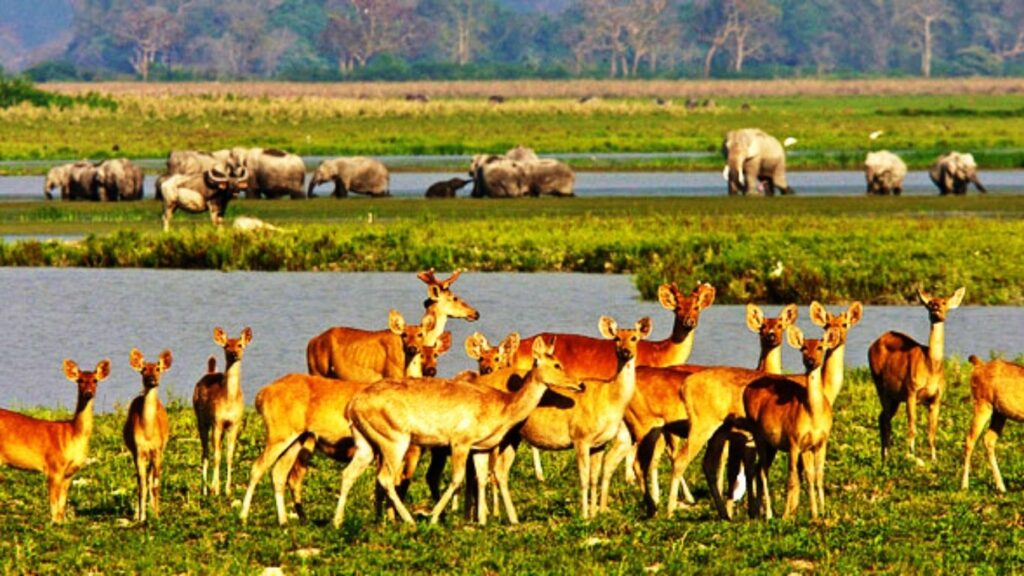
- Carry a zoom lens of at least 300mm if you’re serious about wildlife photography — most sightings, especially tigers, happen at a respectful distance.
- Morning light is everything. The early 7:30 AM shift consistently offers the best combination of soft light and active animal movement, before the midday heat sends most wildlife into the shade.
- Elephant safaris get you closer to rhinos than jeeps can, since elephants can move through marshy terrain jeeps can’t access — worth doing at least once even if you’re primarily booking jeep safaris.
- Patience matters more than luck. Many repeat visitors report their best tiger sightings came on a second or third safari, not the first.
The Conservation Story Behind Kaziranga National Park
What makes Kaziranga National Park stand out globally isn’t just the wildlife numbers — it’s the enforcement effort behind them. Rhino horn poaching has historically been one of the biggest threats to the park, driven by demand in illegal wildlife trade markets. Between 1980 and 2005 alone, hundreds of rhinos were lost to poachers.
In response, Assam’s forest authorities built one of the most assertive anti-poaching frameworks in Asia, including a dedicated Special Rhino Protection Force, an extensive network of anti-poaching camps, and intelligence-led patrolling. This sustained effort is a major reason the rhino population has continued climbing year after year rather than declining, even as poaching pressure persists in the region.
The park has also had to adapt its conservation strategy around the very floods that define its ecosystem. Officials have constructed over 200 artificial highlands across Kaziranga National Park, giving animals — particularly rhinos, deer, and smaller mammals — elevated ground to retreat to during peak monsoon flooding. Underpasses have also been added along the highway bordering the park to help elephants and other wildlife safely cross into the Karbi Anglong hills when water levels rise, reducing the historically high number of roadkill incidents during flood season.
This combination of strict anti-poaching enforcement and flood-adapted infrastructure is part of why Kaziranga National Park is often cited as one of the most effective conservation models in South Asia — and why the story behind the safari is, in many ways, just as compelling as the animals themselves.
How to Reach Kaziranga National Park
- By Air: The nearest airport is Jorhat Airport (Rowriah), about 97 km away. Guwahati’s Lokpriya Gopinath Bordoloi International Airport is the better option for international or long-haul connections, roughly 217 km away.
- By Train: Furkating Junction is the closest railhead at around 85 km, followed by Jorhat Railway Station and Guwahati Railway Station.
- By Road: Kaziranga has solid highway connectivity via NH-715 (formerly NH-37), with regular state and private buses from Guwahati and Jorhat.
Safari Options and Approximate Costs
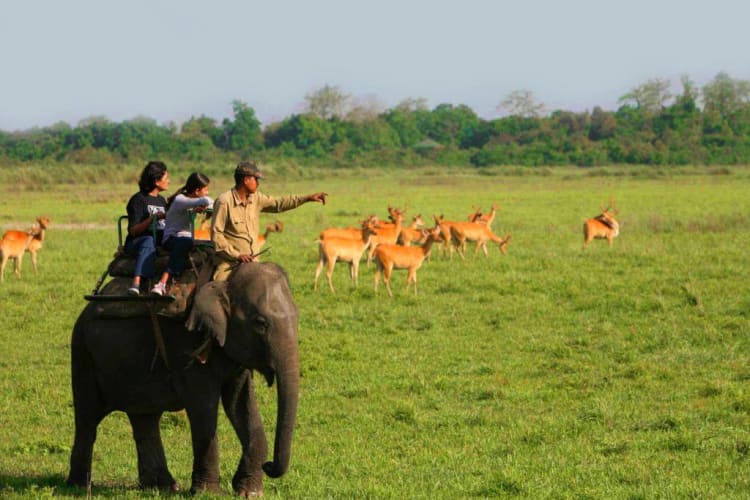
Kaziranga National Park offers two main types of safaris:
- Jeep Safari: Covers more ground and is ideal for spotting tigers, elephants, and wide landscape views. Morning shifts typically run from 7:30 AM, with afternoon shifts from around 1:30 PM.
- Elephant Safari: A quieter, slower-paced option that gets you closer to grazing rhinos without the engine noise of a jeep — usually lasting around 1 to 1.5 hours.
Costs vary by range (Kohora/Central, Bagori/Western, Burapahar) and nationality (Indian vs. foreign tourist), but as a rough guide, expect to budget ₹1,500–3,500 per person for a jeep safari and ₹1,500–2,500 for an elephant safari, excluding entry and camera fees.
Tips for Planning Your Kaziranga National Park Visit
- Book early once the season opens. Following Prime Minister Narendra Modi’s widely shared 2026 visit to the park, visitor numbers and revenue both saw a sharp rise, and accommodations have been filling up faster each season since.
- Pick your range strategically. The Kohora (Central) range is the most popular for rhino sightings, while Bagori (Western) is often recommended for a higher chance of tiger sightings.
- Visit in winter for birdlife. If birdwatching is a priority, plan your trip for December–February, when migratory waterbird numbers peak.
- Combine with Jorhat and Majuli. Since Jorhat is the closest major gateway city, many travellers combine a Kaziranga safari with a Majuli Island visit in the same trip.
Frequently Asked Questions
1. Is Kaziranga National Park open right now? No. Kaziranga National Park closed on May 29, 2026, for its annual monsoon shutdown, and will reopen around late September to early October 2026.
2. What is the current rhino population in Kaziranga National Park? The most recent census recorded 2,613 Greater One-Horned Rhinoceros, the highest count ever recorded in the park.
3. Why does Kaziranga National Park close every year? The park floods seasonally due to the rising Brahmaputra River during monsoon, making safaris unsafe and disrupting wildlife movement, so authorities close all safari operations as a precaution.
4. Which is better — jeep safari or elephant safari in Kaziranga? Jeep safaris cover more area and are better for tiger and elephant sightings, while elephant safaris offer a quieter, closer experience with rhinos.
5. How many tigers are in Kaziranga National Park? Kaziranga has over 100 tigers, with one of the highest tiger densities recorded anywhere in the world in parts of its core zone.
6. Can I visit Kaziranga and Majuli in the same trip? Yes. Jorhat serves as the common gateway to both destinations, making it easy to combine a Kaziranga safari with a Majuli Island visit.
7. What is the best time to visit Kaziranga National Park for birdwatching? December through February is ideal, coinciding with peak migratory waterbird season along the Central Asian Flyway.
8. Which safari range in Kaziranga is best for first-time visitors? The Kohora (Central) range is generally recommended for first-timers, thanks to its high rhino density and well-developed infrastructure.
9. Is Kaziranga National Park suitable for a family trip with kids? Yes, jeep safaris are family-friendly and don’t require any special physical fitness, though very young children may find early morning starts and long safari durations tiring.
10. How far in advance should I book a Kaziranga safari? Given rising visitor numbers each season, especially after high-profile visits like the Prime Minister’s, it’s best to book safaris and accommodation at least 4–6 weeks before your planned travel dates once the park reopens.
Conclusion
Kaziranga National Park is currently closed, but that’s exactly why now is the right time to start planning. With record rhino numbers, a major park expansion underway, and visitor demand climbing every season, waiting until the gates reopen to start booking could mean missing out on the best slots and stays. Keep an eye on the official reopening announcement, lock in your range and safari type in advance, and consider pairing your trip with nearby Jorhat and Majuli for a complete Upper Assam itinerary.
For official updates on the reopening date and booking, check the Assam Forest Department and Kaziranga National Park’s official tourism portal before finalizing your travel dates.