
Efficiency Reimagined: The Impact of the AI Revolution on Global Industry
The year 2026 has arrived, and with it, a realization that has been brewing for a decade: we are no longer “preparing” for a digital shift; we are living in the peak of a total industrial reimagining. From the sprawling “dark factories” of Southeast Asia to the high-frequency trading floors of London and New York, the fundamental nature of work, production, and value creation has been irrevocably altered. At the heart of this seismic shift is a single, undeniable force: The Impact of the AI.
What began as a trend of chatbots and generative art has matured into a sophisticated infrastructure of “Agentic AI”—systems that don’t just suggest, but execute. As we look across the global landscape, efficiency is no longer defined by how well humans use tools, but by how seamlessly AI orchestrates the world around us.
1. The Dawn of the Autonomous Factory
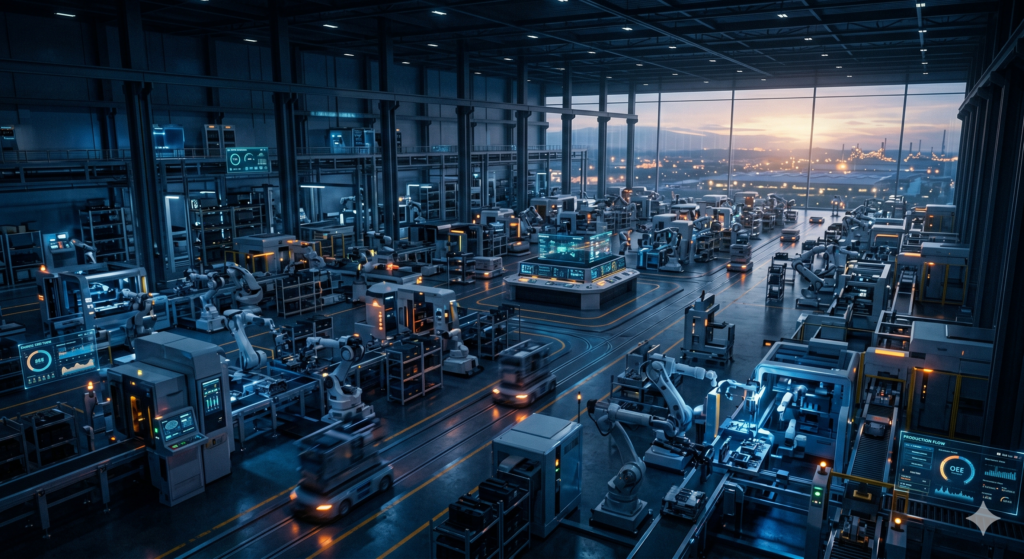
Manufacturing has always been the frontline of industrial revolutions, and the current era is no exception. In 2026, the concept of the “Smart Factory” has evolved into the “Dark Factory”—facilities where production lines hum in total darkness because the physical and digital agents operating them require no light, heat, or human intervention for routine tasks.
The Impact of the AI in this sector is most visible in the transition from simple automation to predictive orchestration. Traditional robots followed rigid scripts; today’s AI agents use real-time computer vision and “Digital Twins” to predict equipment failure before it happens. By simulating millions of production variables in a virtual environment, companies are achieving Overall Equipment Effectiveness (OEE) scores that were statistically impossible just five years ago. This isn’t just about speed; it’s about a 24/7 cycle of self-optimization that reduces waste to near-zero levels.
2. Healthcare: From Reactive to Predictive
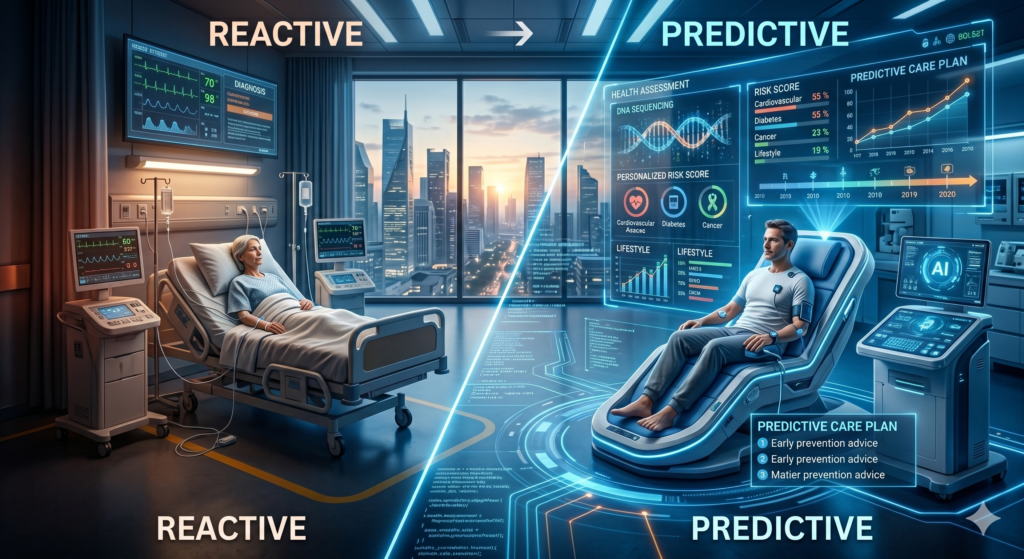
Perhaps the most human-centric shift is occurring in medicine. For decades, healthcare was a reactive industry—you got sick, and then you were treated. Today, The Impact of the AI has flipped the script. Machine learning models now analyze patient data, genetic markers, and even environmental factors to predict chronic illnesses years before the first symptom appears.
- Smarter Diagnostics: AI-powered medical imaging can now spot abnormalities in X-rays and MRIs with a higher accuracy rate than human radiologists, reducing diagnostic times from days to mere minutes.
- Drug Discovery: The time required to bring a new life-saving drug to market has been slashed. AI simulates molecular interactions, allowing pharmaceutical companies to bypass years of “trial and error” lab work.
The result is a healthcare system that is more efficient, less expensive, and—crucially—more personalized. Efficiency here isn’t just a business metric; it’s a measurement of lives saved.
3. Financial Markets and the Speed of Thought
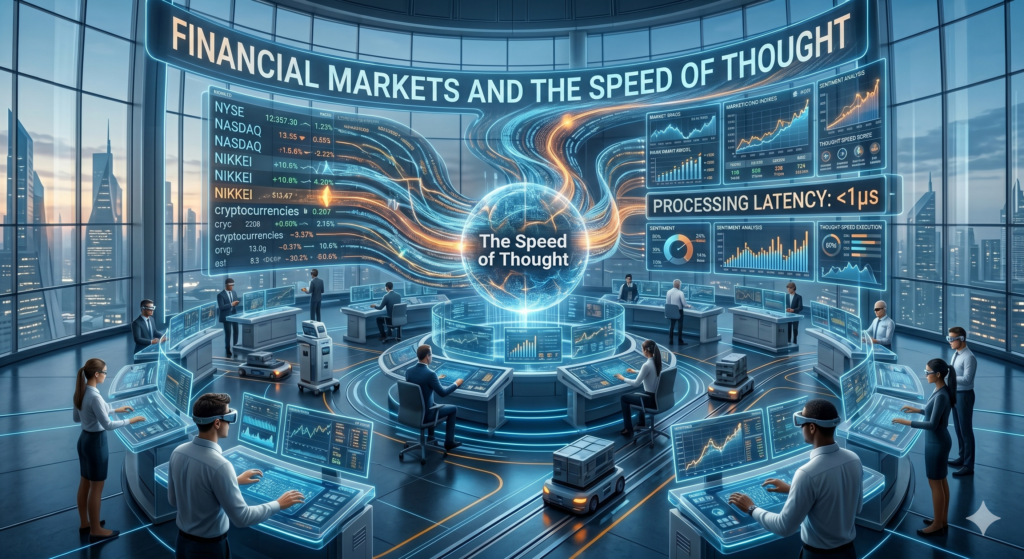
In the world of global finance, the window for decision-making has shrunk from hours to milliseconds. The Impact of the AI on the financial sector has been total. Traditional “back-office” roles in bookkeeping and auditing have been replaced by autonomous systems that reconcile millions of transactions in real-time, eliminating the “end-of-month” rush that used to plague the industry.
Beyond administration, AI is now the primary architect of investment strategies. Predictive analytics can forecast market volatility by processing vast “alternative data” sets—satellite imagery of shipping lanes, social media sentiment, and real-time energy consumption—to give investors an edge that human analysts simply cannot match. While this has raised questions about market stability, the sheer efficiency of capital allocation has reached unprecedented levels.
4. Logistics: Solving the “Last Mile”
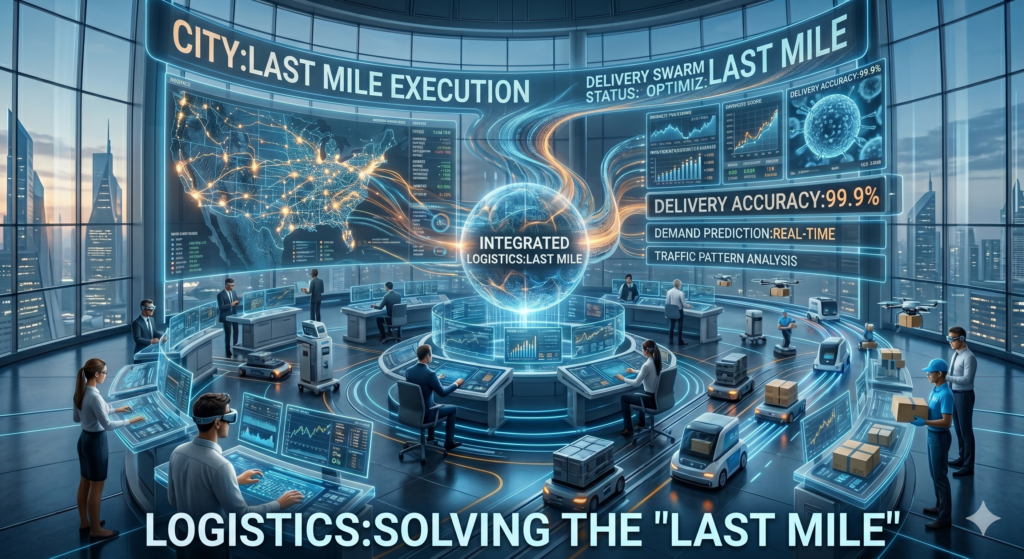
The global supply chain, once fragile and prone to bottlenecks, has become a resilient, self-healing organism. The Impact of the AI in logistics is most prominent in the “last mile”—the most expensive and complex part of any delivery.
Through a combination of:
- Autonomous Fleet Routing: AI dynamically adjusts delivery paths based on live traffic, weather, and even the availability of the recipient.
- Warehouse Swarms: Autonomous Mobile Robots (AMRs) work in “swarms” to sort and pack goods with 99.9% accuracy.
- Demand Sensing: Instead of reacting to orders, AI predicts them. Retailers now move stock to local distribution centers before the customer even clicks “buy.”
5. The Workforce Evolution: A K-Shaped Divergence
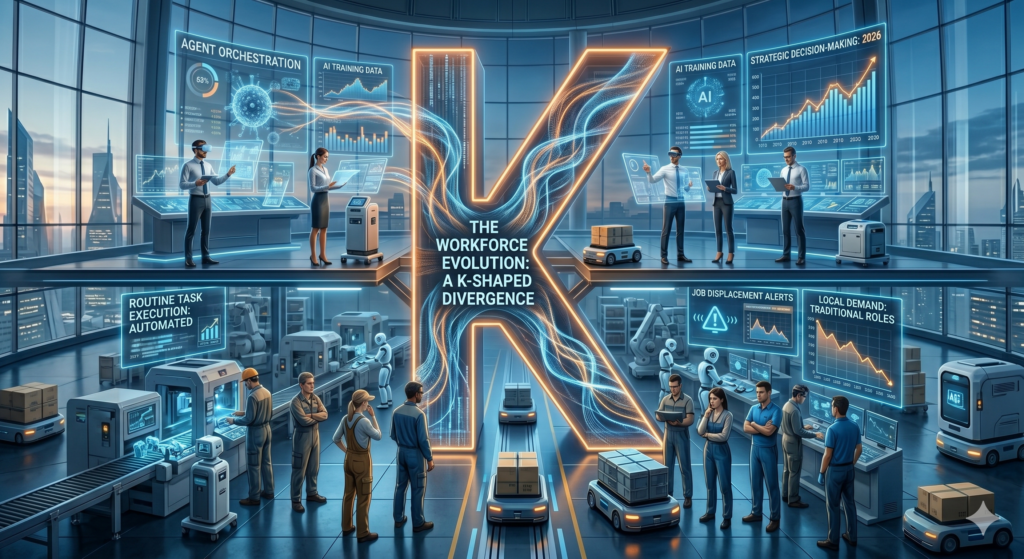
We cannot discuss efficiency without addressing the human element. The fear that “robots will take our jobs” has been replaced by a more nuanced reality. The Impact of the AI has created a K-shaped divergence in the labor market.
On one side, we see a massive demand for “Human-AI Collaboration” roles. These are professionals who act as “Agent Orchestrators,” managing the AI systems that do the heavy lifting. On the other side, routine tasks in accounting, data entry, and basic customer service have seen significant displacement.+1
However, historical data from 2025 and early 2026 suggests that while 300 million jobs globally are “exposed” to automation, the revolution is also a job creator. We are seeing an explosion in roles for data ethicists, AI trainers, and infrastructure engineers needed to build the massive data centers powering this boom. The Impact of the AI is not just about replacing labor; it’s about upgrading it.
6. The Infrastructure Bottleneck: Energy and Connectivity
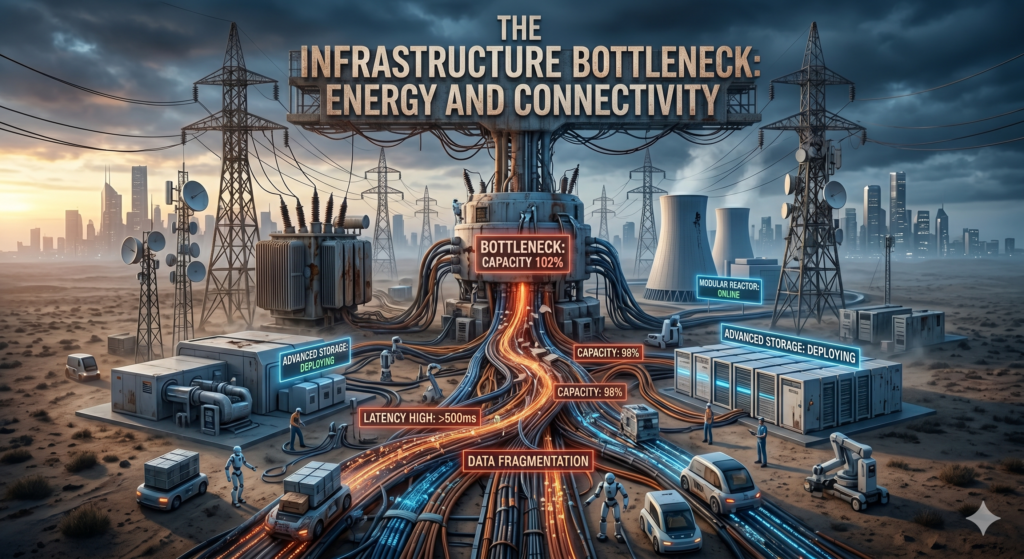
A reimagined industrial landscape requires a reimagined physical world. You cannot run a global AI economy on 20th-century power grids. The Impact of the AI has forced a massive surge in energy demand, leading to a “Gold Rush” for modular nuclear reactors and advanced battery storage.
Furthermore, connectivity is now a prerequisite for industrial survival. 96% of industrial leaders now cite reliable, high-speed wireless networks as the “oxygen” of their operations. Without the infrastructure to support real-time data flow, the efficiency gains of AI remain locked behind a wall of latency.
7. Ethical Governance: The Final Frontier of Efficiency
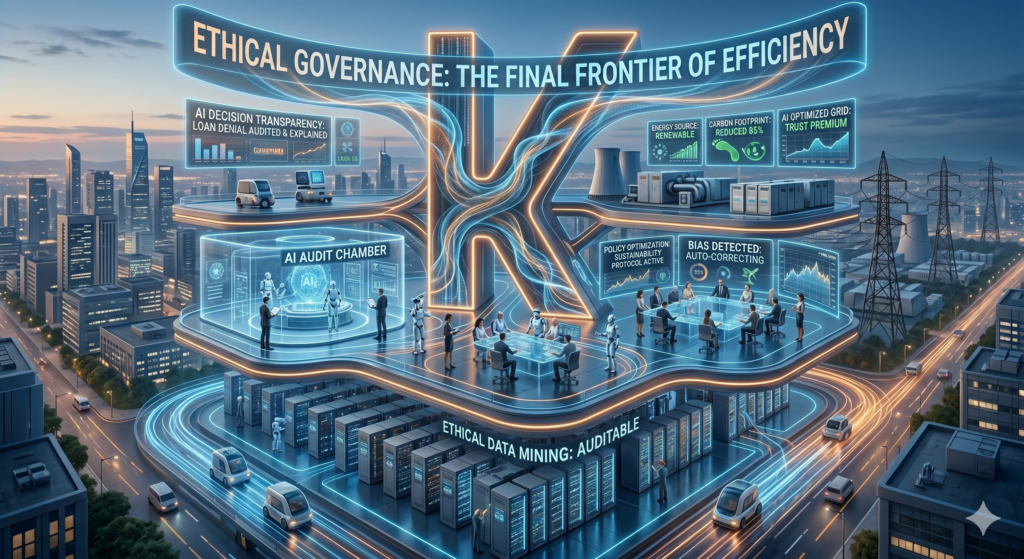
As we reach the middle of 2026, the conversation is shifting from “What can AI do?” to “What should AI do?” True efficiency includes sustainability and trust. The Impact of the AI is now being measured by its ability to reduce a company’s carbon footprint through optimized energy use and its adherence to “Explainable AI” (XAI) standards.
If an AI system makes a decision—whether it’s denying a loan or adjusting a chemical mix in a factory—humans must be able to audit the “why.” Organizations that prioritize transparent AI are finding that they gain a “trust premium” from consumers, which is a different, yet equally vital, form of efficiency.
Also vist-Top 5 Gym in Bhiwani The Ultimate Fitness Guide for 2026
8. Looking Ahead: The Age of Agentic Industry
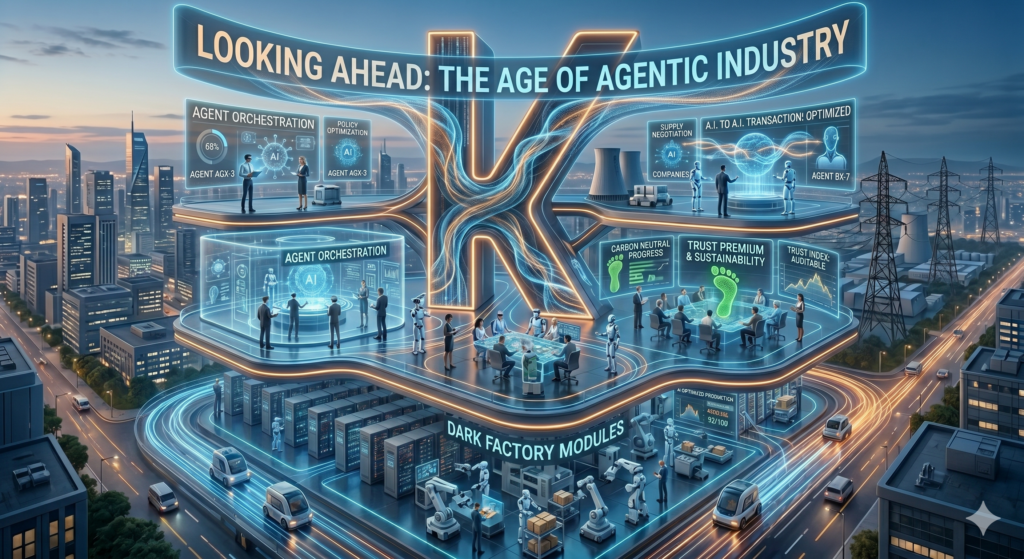
We are moving toward a world of “Agentic Industry,” where AI agents from different companies talk to each other to negotiate supply prices, schedule shipping, and manage inventory without a single human email being sent.
The Impact of the AI has essentially turned the global economy into a giant, interconnected software program. For the businesses that have successfully integrated these systems, the rewards are clear: cash-flow margins that are double the global average and a level of agility that allows them to pivot in days rather than years.
9. Embracing the Reimagined World
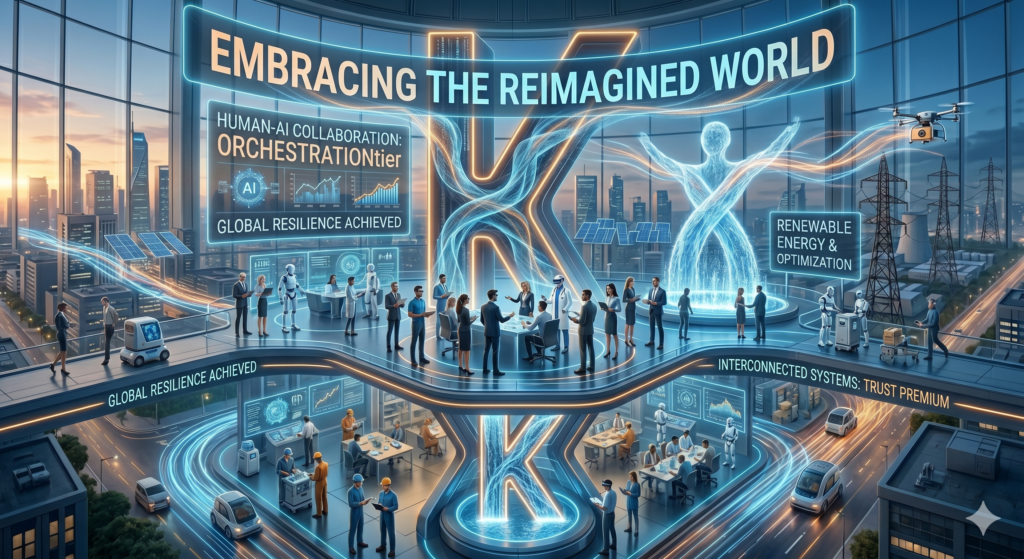
The AI revolution is not a distant light on the horizon; it is the ground we stand on. From the way we manufacture goods to the way we treat disease and manage our money, The Impact of the AI has redefined what it means to be productive.
The winners of 2026 are not those who simply “bought” AI tools, but those who reimagined their entire business model around them. Efficiency is no longer about doing things better; it is about doing things that were previously thought impossible.
“The true measure of the AI revolution isn’t found in the lines of code, but in the hours of human time it liberates and the global challenges it finally makes solvable.”
As we continue to navigate this era, one thing is certain: The Impact of the AI will only deepen. The question for every global leader, entrepreneur, and worker is no longer if they will be affected, but how quickly they can adapt to a world where efficiency has been completely reimagined.
Key Takeaways for Global Leaders in 2026
| Sector | Primary AI Driver | Core Benefit |
|---|---|---|
| Manufacturing | Dark Factories & Physical AI | Zero-waste, 24/7 production |
| Healthcare | Predictive Diagnostics | Personalized medicine, faster drug discovery |
| Finance | Real-time Auditing & Alt-data | Instant capital allocation, fraud prevention |
| Logistics | Agentic Supply Chains | Predictive stocking, “last-mile” optimization |
| Workforce | Human-AI Collaboration | Shift from execution to orchestration |
Export to Sheets
The Impact of the AI is the defining story of our decade. By understanding its nuances, we don’t just survive the revolution—we lead it.
Conclusion: Steering the Ship in an AI-First World
As we look toward the horizon of 2026 and beyond, it is clear that we have moved past the era of mere experimentation. The Impact of the AI is no longer a localized phenomenon felt only by tech giants; it is the central nervous system of global commerce. We have witnessed a fundamental shift where efficiency is no longer calculated by human output per hour, but by the synergy between human intuition and machine precision.
This revolution has brought us to a crossroads. On one hand, the “Dark Factories” and autonomous logistics networks promise a world of abundance, where waste is minimized and life-saving medical breakthroughs are accelerated. On the other hand, the displacement of traditional roles and the massive energy requirements of these systems present challenges that require urgent, ethical leadership.
Ultimately, The Impact of the AI is what we choose to make of it. By focusing on “Explainable AI” and sustainable infrastructure, global industries can ensure that this newfound efficiency doesn’t just pad the bottom line, but actually contributes to a more resilient and equitable global society. The reimagining of efficiency is complete—now, the work of mastering it begins.
Frequently Asked Questions (FAQ)
1. How has The Impact of the AI changed the job market for entry-level professionals?
While many routine data-entry and administrative roles have been automated, a new “collaboration tier” of jobs has emerged. Companies are now looking for “AI-fluent” graduates who can prompt, manage, and audit AI agents. The focus has shifted from “doing the task” to “managing the system that does the task.”
2. Is the energy consumption of AI a threat to global sustainability?
It is a significant challenge. However, The Impact of the AI is also being used to solve this very problem. AI is currently being deployed to manage smart grids, optimize the cooling of data centers, and even accelerate research into nuclear fusion and high-capacity battery storage.
3. What does “Agentic AI” mean in a professional context?
Unlike generative AI, which simply creates content, Agentic AI can take action. In industry, this means an AI can identify a low stock level, negotiate a price with a supplier’s AI, and authorize a shipment without needing a human to click “approve” at every step.
4. How can small businesses survive The Impact of the AI against giant corporations?
The “democratization of intelligence” is a key feature of this era. Smaller firms now have access to the same high-level analytical tools as Fortune 500 companies via cloud-based API services. Efficiency is becoming more about “agility” and “niche expertise” than just sheer size.
5. What are the risks of “Dark Factories” in terms of security?
With the removal of human presence, cybersecurity becomes the primary defense. The Impact of the AI on security has led to “Self-Defending Networks” that can detect and neutralize cyber threats in microseconds, long before a human IT professional would even see an alert.
6. Will The Impact of the AI eventually lead to a shorter work week?
In many sectors, yes. We are seeing a trend toward the “Four-Day Productive Week,” where the efficiency gains provided by AI allow companies to maintain the same output while reducing human hours, focusing human time on creative strategy and high-level problem solving.
7. How do we ensure that AI remains ethical and unbiased?
This is the “Final Frontier” of the revolution. Industry leaders are now adopting “Human-in-the-loop” (HITL) protocols and strict XAI (Explainable AI) standards to ensure that The Impact of the AI remains transparent, auditable, and aligned with human values.