
The Ultimate No-Equipment Home Workout for Beginners in 2026
Currently, the fitness world undergoes tremendous changes from only a couple of years ago. Long gone are the days where all people needed to keep healthy was a gym membership. The functional independence trend is growing very powerful through 2026. Lots of people want to see results without having to go to the gym, buy expensive exercise equipment or share locker rooms with strangers.
Hopefully, this beginner home workout guide gives anybody with a body some quick ways to grow from nothing to a hero using nothing other than their own body weight and a small amount of floor space.
Why Start a Home Workout for Beginners in 2026?
1.A fitness journey can often be intimidating because of the bright lights and heavy iron found in a commercial gym, which seems like more of a barrier than an invitation to exercise. A Home Workout for Beginners gives those barriers to exercise no longer exist:
2.Efficiency – You can finish your entire workout in the time it would normally take you to drive to a gym.
3.Zero Cost – You don’t need an expensive $100/month subscription to have six-pack abs or improve your heart health.
4.Privacy – You can learn the movements at your own pace without feeling self-conscious about what others might think of you.
5.Consistency – When your gym is in your living room, it is much easier for you not to make an excuse for missing a workout!
Training – The SciencBodyweight e of Calisthenics
The most common misconception held by people beginning to use bodyweight training techniques (calisthenics) is that they will not gain muscle without added resistance (weights).
For example, if you lift a 10kg Dumbbell versus doing push-ups or pull-ups using your bodyweight, your body does not register or recognize the difference between those two weights. Your body will only register Tension and Resistance on its Muscles using Gravity and the Proper Angles to strengthen them enough for Muscle growth (Hypertrophy) and Fat Loss .
By the year 2026, “Calisthenics” and “Bodyweight Strength” (training) has transitioned into an acceptable way of exercising because they provide benefits beyond just improving your looks; They also have an effect on how you perform Functional Activities of Daily Life.
Creating your home “gym” space
This does not have to be a dedicated room. Even a small section of your studio apartment could work.
The flooring: A yoga mat is a good idea because it will allow you to have grip and cushion under your feet. If you want to save some money though, you can use a rug or even a towel on any non-slip surface.
Air flow: Open up a window and/or turn on a fan. There is going to be sweat so you need good airflow.
Water: Keep a water bottle by your side so that you can drink during your workout, especially if you have been working hard.
Digital setup: Keep your phone or laptop nearby to use while you workout (use as a timer or to follow this guide).
2026 Beginner Routine: Full Body Circuit
This is a circuit training routine. You will do one exercise after the other with little or no rest in between, then do this whole circuit 3-4 times. You will keep your heart rate up (cardio) and build strength at the same time.
1. Warm Up (5 Minutes)
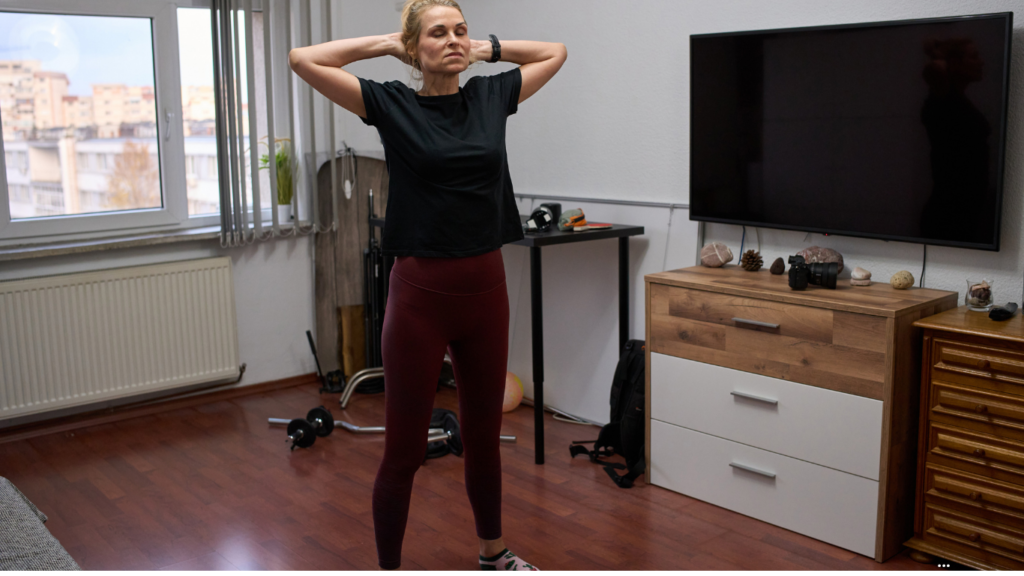
Do NOT skip this! The warm up will help prepare your joints and get more blood flowing through your body.
Jumping Jacks – 60 Seconds
Arm Circles – 30 Seconds (forward and backward)
Dynamic Lunges – 10 reps for each leg
Cat/Cow Stretch – 1 Minute to activate spine
2. Squats (Lower Body)
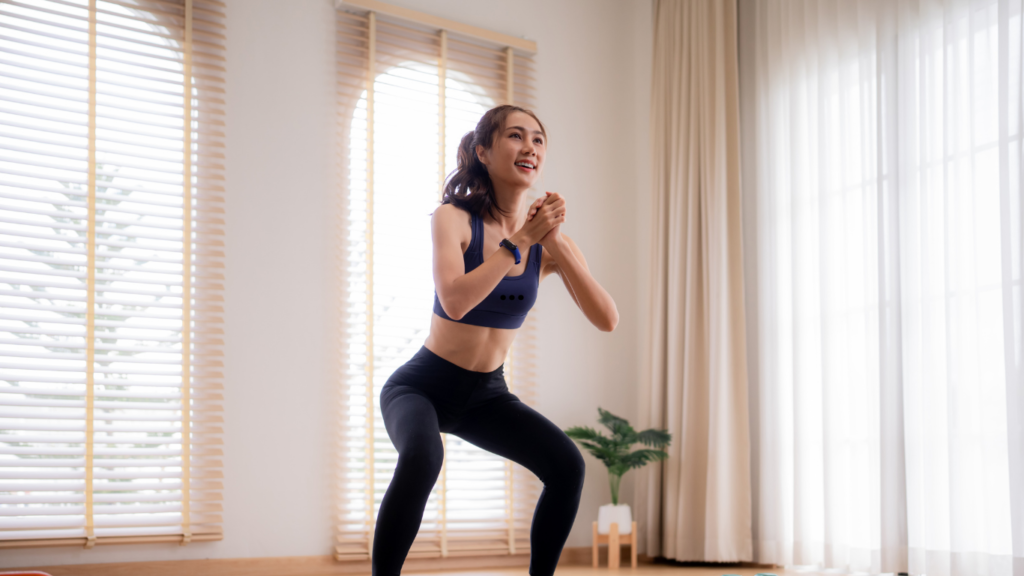
How: Stand with feet hip-width apart; bend at your knees as if there is a chair behind you (see below for example). Chest needs to stay up.
Reps: 12-15
Why: Squats are king when it comes to leg exercises – they work out
3. Incline push-ups or “Knee Push-Ups” – (Upper Body Push):

How: If a regular push-up is too difficult, use a stable table or sofa to aid you, or drop to your knees. In either case, maintain a straight line with your torso.
Reps: 8-12
Why: To increase strength in the chest, shoulders and triceps
4. Glute Bridges – (Posterior Chain):
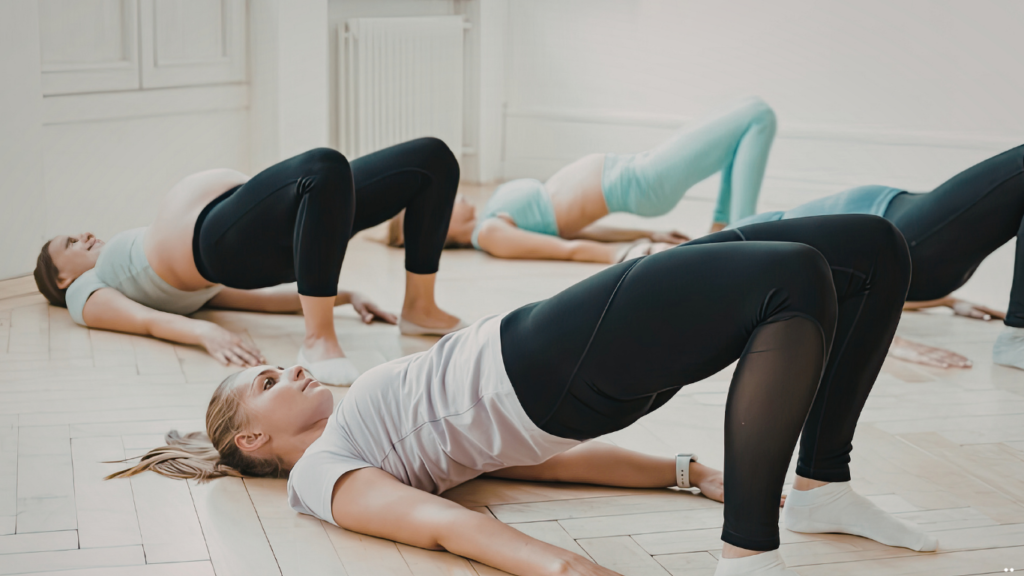
How: Laying on your back with your knees bent, push your hips toward the sky while squeezing your glutes at the top of the movement.
Reps: 15
Why: These are important to counteract the sitting posture most of us find ourselves having with all of the time spent working at a desk.
5. Plank – (Core):
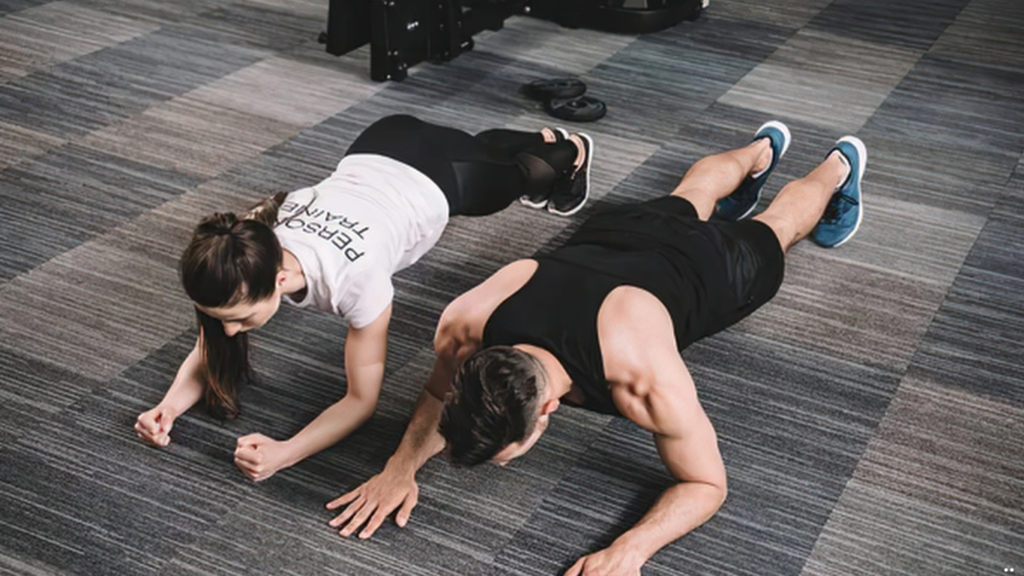
How: Stabilize yourself by resting on your elbows and feet; keep your hips from sagging.
Time: 30-45 seconds
Why: To develop core stability, which will protect your lower back.
6. Bird-Dog – (Balance and Stability):
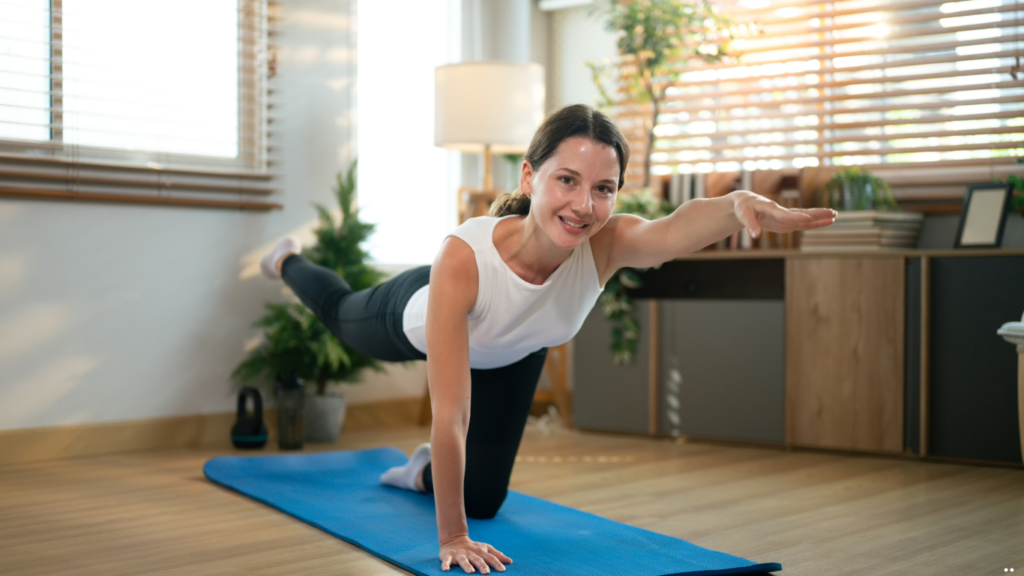
How: From a four-point position, reach your right arm forward and left leg back; switch and repeat.
Reps: 10 per side
Also visit-Top 5 Gym in Bhiwani The Ultimate Fitness Guide for 2026
Weekly Schedule for Success
Consistency is the “secret sauce.” Here is a sustainable plan for your Home Workout for Beginners:
| Day | Activity |
| Monday | Full Body Circuit (3 Rounds) |
| Tuesday | Rest or 20-min Walk |
| Wednesday | Full Body Circuit (3 Rounds) |
| Thursday | Rest or Light Stretching |
| Friday | Full Body Circuit (4 Rounds) |
| Saturday | Active Recovery (Hiking, Biking, or Yoga) |
| Sunday | Full Rest |
Common Mistakes to Avoid
- Holding Your Breath: Always exhale on the “effort” part of the move.
- Sacrificing Form for Speed: It is better to do 5 perfect push-ups than 20 sloppy ones.
- Ignoring Pain: Distinguish between “muscle burn” (good) and “joint pain” (bad). If it hurts your joints, stop and check your form.
- Over-training: Start slow. Your muscles need rest days to actually grow and repair.
Nutritional Factors (30% of the Solution) Vs Nutrition (70% of the Solution)
A Home Workout for Beginners is only 30% of achieving your fitness goals; the remaining 70% is the proper nutrition to support fitness.
1.Protein (25% of your diet): Include a portion of protein at every meal to assist with muscle recovery (examples are lentils, eggs, lean meats, or tofu)
2.Hydration (25% of your diet): Minimum 2- 3 Liters of water daily. More so if you are doing a workout that day.
3.Whole Foods: Eat lots of green leafy vegetables, whole grains, and fruits. Processed sugars are known as the largest energy-sucking food on the planet in 2026.
Longrange, How Do You Keep Motivated?
The New Year energy dies out by February each year. Here are some tips to help you keep moving forward with your Home Workout for Beginners throughout 2026.
Tracking Progress: Record how many repetitions you did on paper. Having the ability to measure your success will provide a major mental victory when next week you can go from 12 repetitions to 15 repetitions.
Gamifying It: Use fitness apps to compete against others virtually or with friends.
Finding Your “Why”: Have you started exercising for more energy in playing with your children, wanting to look better, or to relieve stress? Remind yourself of your motivation every morning.
Also visit-https://share.google/zBXyfGt4Ru9LNJ5qT
Conclusion
The Final Word: Your Fitness Journey Starts Now
Embarking on a home workout for beginners in 2026 doesn’t require a pricey gym membership or a room full of bulky machines. As we’ve seen, the most effective tool you own is your own body weight. By mastering these fundamental movements, you aren’t just burning calories; you’re building a foundation of functional strength, mobility, and discipline that will serve you for years to come.
Consistency beats intensity every single time. Whether you have fifteen minutes or fifty, the key is to just show up. Keep showing up for yourself, stay hydrated, and watch how quickly “beginner” becomes a title of the past.
Frequently Asked Questions (FAQ)
1. How many times a week should a beginner do this home workout? For best results, aim for 3 to 4 days per week. In 2026, fitness experts emphasize “micro-loading” your habit—starting with manageable sessions to ensure you don’t burn out. This schedule allows your muscles enough time to recover and grow. Remember, rest days are just as important as workout days!
2. I can’t do a full push-up yet. What should I do? Don’t sweat it! Modifications are essential in any home workout for beginners. Start with knee push-ups or incline push-ups (placing your hands on a sturdy elevated surface like a couch or table). As your strength increases, you’ll naturally transition to the floor.
3. How long will it take to see results? While everyone’s body is different, most beginners feel an increase in energy and mood within the first week. Physical changes, such as muscle tone and weight loss, typically become noticeable within 4 to 6 weeks of consistent effort and proper nutrition.
4. Do I need a yoga mat for a home workout? While not strictly necessary, a mat provides grip and cushioning for your joints. If you don’t have one, a firm carpet or a folded towel can work in a pinch—just ensure the surface isn’t slippery to avoid injury.
5. Should I eat before or after my workout? This depends on your body’s preference. However, a small, carb-focused snack (like a banana) 30–60 minutes before can provide energy, while a protein-rich meal within 2 hours after helps your muscles recover faster.
6. Can I lose weight with just bodyweight exercises? Absolutely. When combined with a caloric deficit (burning more energy than you consume), high-intensity bodyweight movements are incredibly effective for fat loss and metabolic health.
2026 Home Workout Quick-Stats
| Feature | Recommendation |
| Workout Duration | 15–30 Minutes |
| Frequency | 3–4 Times Weekly |
| Progression | Increase reps every 2 weeks |
| Tech Tip | Use a smartwatch to track heart rate zones |