
AI SEO in 2026 The Complete Guide to Ranking in Google AI Overviews and ChatGPT
Search is no longer just a list of blue links. Google’s AI Overviews now appear on the majority of informational queries, ChatGPT has become a genuine discovery channel, and more than half of all searches end without a single click to a website. If your content strategy hasn’t changed in the last two years, it’s already falling behind. This is where AI SEO comes in — and if you run a business, a blog, or an agency, understanding this shift is no longer optional.
This guide breaks down what AI SEO actually means in 2026, why it matters more than ever, and exactly how to build a content and technical strategy that gets you cited, ranked, and trusted by both traditional search engines and AI answer systems.
What Is AI SEO?

AI SEO is the practice of optimizing your website, content, and technical infrastructure so that both traditional search engines and AI-driven answer systems — Google AI Overviews, AI Mode, ChatGPT, Perplexity, and Microsoft Copilot — can understand, trust, and cite your content.
Traditional SEO focused on ranking a page for a keyword so a human would click it. This newer discipline adds a layer on top: making sure your content can be pulled, summarized, and quoted by an AI system that’s answering a question on your behalf, often without the user ever visiting your site.AI SEO in 2026 In practice, doing this well still includes everything classic SEO covers — keyword research, backlinks, technical performance — but it puts far more weight on entity clarity, structured data, and answer-first writing.
In short, the goal is to earn a citation, not just a ranking.
Why AI SEO Matters More Than Ever in 2026
The numbers make the case on their own. Google’s AI Overviews now appear on roughly 80–88% of informational queries, and they reach well over a billion users every month. At the same time, more than 60% of all searches — and closer to 77% on mobile — now end in a zero-click result, meaning the user gets their answer without visiting any website at all. AI SEO in 2026 ChatGPT alone is estimated to account for a meaningful and growing share of total digital search volume.
What this means for anyone doing business online is simple: if your content isn’t structured for this new landscape, you’re invisible in a growing share of searches. Being ranked #3 on a traditional results page used to guarantee some traffic. Being ignored by an AI Overview or a ChatGPT answer today guarantees none. This is exactly why AI SEO has moved from “nice to have” to a core requirement of any serious digital strategy in 2026.
AI SEO vs. Traditional SEO at a Glance
| Factor | Traditional SEO | AI SEO |
|---|---|---|
| Primary goal | Rank on page one | Get cited in an AI-generated answer |
| Content structure | Long intros, keyword-led headings | Answer-first, question-led headings |
| Trust signals | Backlinks, domain age | EEAT, authorship, verifiable entities |
| Success metric | Click-through rate | Citation rate, branded search, AI mentions |
| Markup | Optional | Schema and structured data expected |
Neither column replaces the other. Every business doing this well in 2026 is running both approaches at once, not choosing between them.
The Core Pillars
1. Entity Clarity Beats Keyword Stuffing
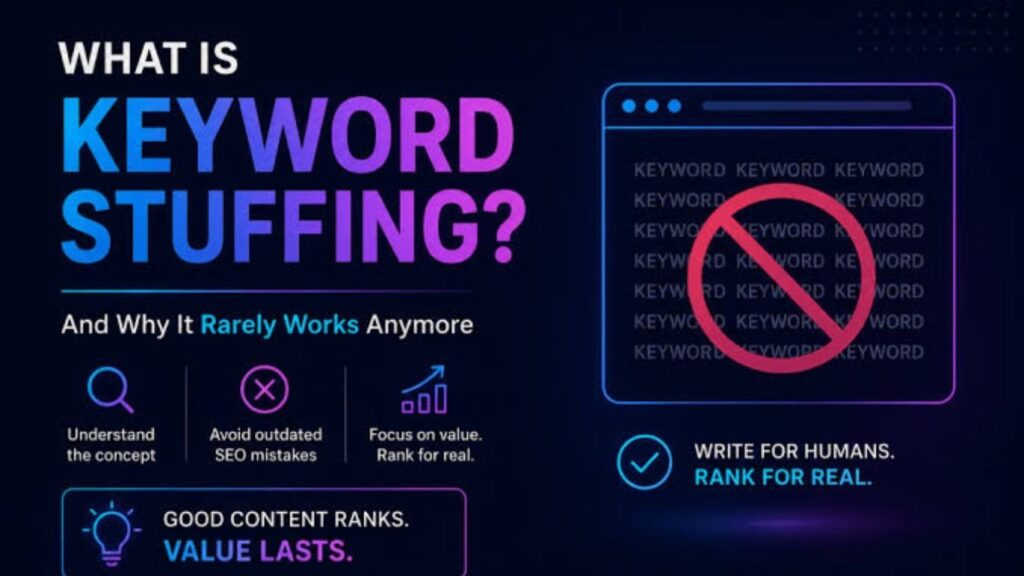
AI systems don’t just match words — they try to understand entities: your brand, your founder, your product, your service area, and how they all connect. AI SEO in 2026 If your website, your Google Business Profile, your LinkedIn, and your directory listings all describe your business slightly differently, machines struggle to classify you correctly, and that undermines everything else you do for AI SEO before you’ve even written a word of content.
The fix is consistency. Use the same business name, description, and service language everywhere. Add an Organization schema to your site so search engines and AI crawlers have a machine-readable definition of who you are. This single step is one of the highest-leverage improvements available to a small or growing business.
2. EEAT Signals: Experience, Expertise, Authority, Trust
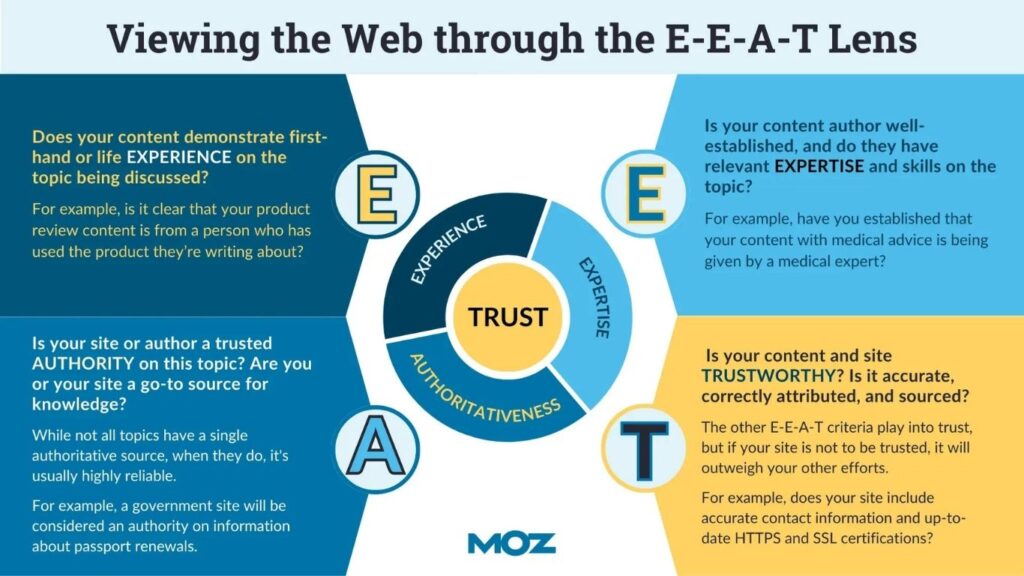
Google’s EEAT framework (Experience, Expertise, Authoritativeness, Trustworthiness) has become central to this practice because AI systems need a reason to trust a source before citing it. AI SEO in 2026 That means real author bios, visible credentials, genuine case studies, and transparent “About” and contact pages all matter more in 2026 than they ever did.
A blog post written by “the marketing team” with no attribution performs worse than one written by a named expert with a clear track record. If you want your content cited by an AI Overview or referenced in a ChatGPT answer, give the machine — and the human reader — a reason to believe you.
3. Answer-First Content Structure

AI systems favor content that answers a question quickly and clearly, then supports that answer with detail. AI SEO in 2026 This is a direct shift away from the old habit of burying the answer under 300 words of introduction. Good writing for this environment puts the direct answer in the first one to three sentences of a section, then expands with context, examples, and nuance.
Practically, this looks like:
- Question-led H2 and H3 headings (“What is AI SEO?” rather than “Understanding the Landscape”)
- Short, extractable answer paragraphs directly under each heading
- Bullet points and numbered steps for processes
- Tables for comparisons, like the one above
This structure doesn’t just help AI Overviews and ChatGPT quote you — it also makes your content genuinely easier for human readers to scan, AI SEO in 2026 which is a big part of why this discipline and good user experience have converged.
4. Structured Data and Schema Markup
If entity clarity is the “what,” structured data is the “how.” Schema markup — using schema.org vocabulary in JSON-LD — tells search engines and AI systems exactly what a piece of content is: an Article, a Product, a Review, an FAQ, a HowTo. Google’s own structured data documentation is the best reference for implementation.
FAQ schema, Article schema, and Organization schema are the highest priority. They give AI systems a clean, unambiguous way to extract your content instead of guessing at it from raw HTML.
5. Topical Authority Over One-Off Keywords
This space in 2026 rewards sites that comprehensively own a topic rather than sites that rank for a single keyword in isolation.AI SEO in 2026 Google and AI answer engines increasingly evaluate whether a domain understands a subject “from A to Z” before treating it as a trustworthy source to cite.
This means content clusters — a strong pillar page supported by several linked, related articles — perform far better than scattered, disconnected posts. If AI SEO is a topic you want to rank for, you also want supporting content on schema markup, EEAT, technical performance, and content strategy, all internally linked together.
A Realistic Example
Picture two small consulting firms offering the same service in the same city. Firm A has a homepage with generic copy, no author names, and no schema markup. Firm B has a named founder with a public bio, three detailed case studies with real numbers, FAQ schema on its service pages, and consistent business information across its website and directory listings.
When someone asks an AI assistant a question in that niche, Firm B is far more likely to be the one quoted, recommended, or linked — not because its service is better, but because its content and entity signals are easier for the system to trust and extract. This is the practical, day-to-day difference a solid AI SEO strategy makes for businesses competing in the same market.
A Step-by-Step Action Plan
- Audit your entity consistency. Check that your business name, description, and services match across your website, Google Business Profile, LinkedIn, and any directories like Clutch or Sortlist.
- Add foundational schema. Start with Organization, Article, and FAQ schema using JSON-LD.
- Rewrite key pages answer-first. Pick your five highest-traffic pages and restructure them so the direct answer appears immediately under each heading.
- Build topical clusters. Identify your core topic and map five to ten supporting articles around it, all internally linked.
- Strengthen EEAT. Add real author bios, credentials, and original case studies with specific, verifiable numbers.
- Monitor AI citations, not just rankings. Track whether your brand is mentioned in AI Overviews, ChatGPT answers, and Perplexity results, in addition to traditional keyword rankings.
- Keep technical SEO clean. Fast load times, mobile-friendly design, and crawlable HTML remain the foundation everything else sits on top of.
Following this sequence consistently is what separates businesses that show up in AI answers from those that quietly disappear from search visibility.
How to Measure Success
Traditional rank tracking still matters, but it no longer tells the whole story.AI SEO in 2026 To properly evaluate an AI SEO effort, track these alongside your usual keyword positions:
- Branded search volume — are more people searching your company or product name directly over time?
- AI mention tracking — does your brand appear when you or a tool asks ChatGPT, Perplexity, or Google AI Mode relevant questions?
- Referral traffic from AI platforms — check your analytics for sessions originating from chat.openai.com, perplexity.ai, and similar sources.
- Featured snippet and AI Overview appearances — visible in Google Search Console under performance data.
None of these metrics replace rankings and organic traffic. They sit alongside them, giving a fuller picture of visibility in a search landscape that increasingly ends before a click ever happens.
Common Mistakes to Avoid
- Keyword stuffing. Repeating a phrase unnaturally hurts readability and no longer helps rankings; this approach rewards natural language and clear entities, not repetition for its own sake.
- Vague service pages. Generic, interchangeable copy gives AI systems nothing specific to cite.
- Ignoring authorship. Anonymous, unattributed content is far less likely to be trusted or quoted.
- Chasing AI hype tactics. Trying to “trick” AI crawlers with hidden text or manipulative markup is a short-term play that tends to get penalized once detected.
- Neglecting the technical basics. No amount of clever content strategy fixes a slow, unindexable, JavaScript-heavy site.
Avoiding these mistakes matters just as much as implementing the pillars above.
Tools That Support This Strategy
- Schema generators for JSON-LD markup (many free tools exist for Organization, FAQ, and Article schema)
- Ahrefs or Semrush for traditional keyword and backlink research, still a foundation of any modern strategy
- Google Search Console to monitor indexing, crawl errors, and performance
- Google Trends for spotting breakout topics early, before they saturate
- AI answer trackers — an emerging tool category that monitors whether your brand appears in AI Overviews, ChatGPT, or Perplexity responses
No single tool does the work for you — it’s a combination of technical hygiene, structured data, and genuinely useful content.
A Note for Agencies Serving International Clients
For agencies and freelancers working across borders, this shift is also a positioning opportunity. Many local competitors in a given market still haven’t touched entity clarity, schema markup, or answer-first content. Offering an AI SEO audit as your entry point — showing a prospective client exactly where their brand is invisible to AI Overviews and ChatGPT, compared to a local competitor who is being cited — is a far stronger opener than a generic outreach pitch.
A few practical notes when running this play internationally:
- Localize entity signals, not just language. A translated homepage isn’t enough; business listings, schema, and directory profiles need to match in each target market’s language and format.
- Watch which AI answer engines dominate locally. ChatGPT and Google AI Overviews lead in most Western markets, but regional players and language-specific assistants can matter more elsewhere.
- Lead with a specific, personalized audit. A short video or PDF showing a prospect’s current AI visibility gap tends to convert far better than a templated cold pitch, since it demonstrates the exact problem this strategy solves rather than describing it abstractly.
Positioned this way, expertise in this area becomes a genuine differentiator rather than another line item on a services page — which matters most when you’re competing for attention with agencies the client has never met in person.
Conclusion
AI SEO isn’t a replacement for traditional SEO — it’s the next layer built on top of it. The fundamentals still matter: fast sites, solid keyword research, quality backlinks, and clear on-page structure. What’s changed is who’s reading your content. Search engines and AI answer systems now sit between you and your audience, and earning their trust requires entity clarity, strong EEAT signals, answer-first writing, and clean structured data.
Businesses that treat this as a core strategy — not an experiment — are the ones showing up in AI Overviews, getting quoted by ChatGPT, and staying visible as search keeps evolving. Start with the audit, fix your entity consistency, add schema, and restructure your content to answer questions directly. That’s the real work of AI SEO in 2026, and it compounds the earlier you start.
Frequently Asked Questions About AI SEO
What is the difference between traditional SEO and AI SEO? Traditional SEO focuses on ranking a page so a human clicks through to your site. This newer approach adds the goal of being understood, trusted, and cited by AI systems like Google AI Overviews and ChatGPT, which often answer the user’s question without a click at all.
Does AI SEO replace the need for keyword research? No. Keyword research remains a foundation of any strategy in this space — it tells you what people are actually searching for. What’s added on top is structure, entity clarity, and answer-first formatting.
How long does it take to see results? Technical fixes like schema markup can influence AI citations within weeks, but building topical authority and EEAT signals typically takes several months of consistent publishing and site improvements.
Do I need a developer to implement AI SEO? Basic steps like adding schema markup, improving authorship, and restructuring content can often be done without a developer using CMS plugins or manual JSON-LD snippets. More advanced technical work, like fixing JavaScript rendering issues, usually benefits from developer support.
Is keyword stuffing still part of a good AI SEO strategy? No. Modern best practice favors natural language, clear entities, and genuinely useful answers over repeated keyword phrases. Overusing a keyword can hurt both readability and trust signals.
Can small businesses compete with big brands using AI SEO? Yes. Because this space rewards clarity, authority, and specificity over sheer content volume, a small business with a clear niche, strong EEAT signals, and well-structured content can outperform a larger, more generic competitor in AI-generated answers.