
Cockroach Janta Party Explained Why Unemployed Youth Formed a Parody Party
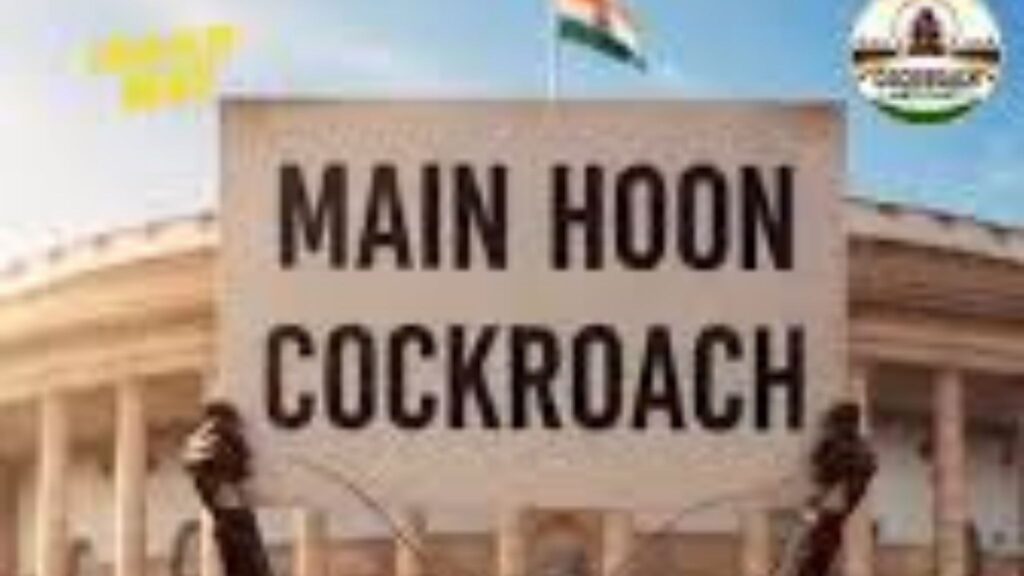
The Indian political landscape has seen its fair share of unusual campaigns, but nothing quite matches the digital storm that erupted in May 2026. Within mere days of its inception, a satirical movement known as the Cockroach Janta Party (CJP) managed to do the unthinkable: its Instagram follower count skyrocketed past 22 million, temporarily eclipsing the official account of the ruling Bharatiya Janata Party (BJP).
Operating under the cheekily rebellious slogan “Secular, Socialist, Democratic, Lazy,” the CJP quickly transformed from an inside joke into a massive national talking point. But behind the humor, the rapid rise of this movement highlights a deeper social reality. It prompts us to look closely at why unemployed youth formed a parody party to express their deep-seated frustrations.
The Genesis: How an Absolute Satire Was Born
The origins of the Cockroach Janta Party trace back to a Supreme Court hearing around mid-May 2026. During a legal session regarding senior designations for lawyers, Chief Justice of India (CJI) Surya Kant reportedly made an analogy comparing certain online activists and disruptive individuals to “parasites” and “cockroaches” who attack the system without contributing positively to the profession.
While the CJI later clarified that his remarks were misquoted and strictly targeted fraudsters using fake degrees, the word “cockroach” had already struck a sensitive nerve across the country.
Instead of retreating, India’s digital-native Gen Z and millennial demographics chose to reclaim the insult. On May 16, 2026, Abhijeet Dipke—a 30-year-old public relations postgraduate student at Boston University and former digital campaign volunteer—officially launched the Cockroach Janta Party online. The movement explicitly positioned itself as the “Voice of the Lazy & Unemployed.”
This very pivot is the core reason why unemployed youth formed a parody party; it allowed them to turn a derogatory term into a badge of digital resilience.
1. Transforming Derogatory Terms into Digital Badges

Historically, political establishments have used marginalizing language to downplay youth protests or social discontent. When young people felt their structural economic struggles were being generalized as mere laziness, they flipped the script.
By embracing the label “cockroach”—an insect famous for its ability to survive nuclear blasts and structural collapse—the youth created a powerful metaphor for their own economic survival. This psychological pivot explains why unemployed youth formed a parody party. If the system viewed them as pests, they would gather collectively as a colony that could not be easily ignored.
2. Satire as a Shield Against High Unemployment Anxiety
India currently boasts one of the largest and most energetic youth populations in the world. However, finding sustainable, high-quality white-collar employment remains a steep hurdle for millions of educated graduates. Traditional methods of petitioning or staging street protests often invite administrative friction or institutional apathy.
Satire, on the other hand, provides a safe, low-risk, and highly shareable avenue for dissent. This brings us back to why unemployed youth formed a parody party: it gave them a creative channel to express genuine economic anxiety through humor, memes, and viral Instagram reels without facing the immediate vulnerabilities of formal political opposition.
3. Structural Distrust in Traditional Political Options
For many young voters, the contemporary political arena feels like a polarized choice between established political entities that do not fully address their core daily concerns. The youth feel caught between the traditional welfare promises of older parties and the hyper-nationalist rhetoric of others.
This polarization is precisely why unemployed youth formed a parody party. They wanted to signal to both the ruling government and the mainstream opposition that the young demographic feels unrepresented by standard political scripts.
4. The Catalyst of Systematic Exam Failures (NEET-UG 2026)
The timing of the CJP’s launch coincided perfectly with widespread public anger over structural failures in the national education and competitive exam frameworks—most notably the NEET-UG 2026 paper leak controversy.
When lakhs of medical aspirants saw their hard work compromised by systemic leaks, their frustration boiled over. The CJP immediately set up online petitions demanding the resignation of Union Education Minister Dharmendra Pradhan.
The immediate alignment with real student grievances shows why unemployed youth formed a parody party. It wasn’t just about making funny jokes; it became an alternative, decentralized platform to demand direct institutional accountability.
5. The Power of Viral Growth and “Chronically Online” Mobilization
Traditional political organizing requires vast financial resources, ground networks, and media backing. In contrast, a parody party requires little more than an understanding of internet culture, sharp copywriting, and relatable content.
The CJP’s mock membership form welcomed individuals who were “chronically online” and “skilled at professional venting.” This low barrier to entry is a primary factor in why unemployed youth formed a parody party. They leveraged their digital fluency to build a massive community overnight, completely bypassing traditional, resource-heavy gatekeepers.
The Satirical Manifesto vs. Real Demands
While the CJP markets itself with a heavy dose of tongue-in-cheek irony, its formal documentation outlines five surprisingly serious policy proposals. This duality showcases that underneath the parody lies a genuine desire for systemic reform:
- Electoral & Judicial Accountability: Demanding a total ban on post-retirement Rajya Sabha nominations for sitting judges to preserve judicial independence.
- Gender Equity in Governance: Advocating for a mandatory 50% reservation for women across Parliament and Cabinet roles.
- Media Ownership Reform: Proposing strict anti-monopoly regulations on big media conglomerates to encourage independent journalism.
- Focus on National Productivity: Demanding state focus on building sustainable economic infrastructure and high-quality job creation over short-term political freebies.
- Student Protections: Creating legal frameworks to safeguard competitive examinations against institutional corruption and paper leaks.
The blend of serious policy with comedic presentation clarifies why unemployed youth formed a parody party. It allowed them to present heavy, systemic issues in an accessible, viral format that resonated across diverse student communities.
Institutional Backlash and the Digital Takedown
The meteoric rise of the Cockroach Janta Party did not go unnoticed by the Indian political establishment. Within a single week, the movement faced a wave of digital restrictions:
- X Handle Restrictions: The party’s primary X account, which had quickly garnered over 200,000 followers, was withheld within India following a formal legal demand.
- Website Takeover: By late May, founder Abhijeet Dipke reported that the official registration platform (where nearly 10 lakh users had signed up) was taken down.
- Instagram Vulnerabilities: The group’s main Instagram hub, boasting millions of followers, faced unexpected access issues and hacking attempts.
The severity of the administrative reaction sheds new light on why unemployed youth formed a parody party. The fact that a decentralized meme page triggered formal legal restrictions, high-level political responses, and Supreme Court filings proves that satire is a potent tool for modern political expression.
Political Reactions: A Divided Digital Front
The unexpected success of the CJP sparked sharp ideological divides across India’s political spectrum:
“If there is a war between a crocodile and cockroaches, I will proudly stand with the Cockroach Janata Party.”
— Manish Sisodia, Senior Aam Aadmi Party (AAP) Leader
While opposition figures like Mahua Moitra (TMC) and Prashant Bhushan publicly supported the movement, the ruling party pushed back strongly. Union Ministers Kiren Rijiju and Sukanta Majumdar downplayed the phenomenon, claiming that a significant portion of the page’s followers originated from external networks or cross-border troll operations.
Dipke quickly countered these assertions by sharing direct backend analytics showing that over 94% of their active audience was located within India. This intense national debate reinforces why unemployed youth formed a parody party: it successfully forced mainstream leaders to confront the sheer scale of young digital dissatisfaction.
Conclusion: The Cultural Shift in Indian Political Dissent
The Cockroach Janta Party may face continuing digital restrictions, platform bans, or eventual saturation as the news cycle moves forward. However, its historic run in May 2026 has established a new precedent for digital activism in India.
When observing why unemployed youth formed a parody party, the takeaway is clear: when young generations feel their voices are being ignored by traditional systems, they will use their digital intelligence to create entirely new arenas of conversation. By taking an institutional insult and turning it into a massive viral movement, India’s youth have demonstrated that humor remains a powerful way to demand a better, more accountable future.
Frequently Asked Questions (FAQs)
What is the Cockroach Janta Party (CJP)?
The Cockroach Janta Party is an Indian online satirical movement launched in May 2026. It serves as a parody political front that uses internet memes and sharp humor to criticize systemic issues like youth unemployment, competitive exam paper leaks, and political accountability.
Who founded the Cockroach Janta Party?
The movement was founded by Abhijeet Dipke, a 30-year-old political communications student at Boston University and a former digital campaign volunteer from Pune, India.
Why did unemployed youth form a parody party?
Educated graduates and unemployed youth formed a parody party to safely express their economic anxieties and frustrations with systemic issues, using viral memes and satire to bypass traditional political gatekeepers.
Was the CJP website banned by the Indian government?
On May 23, 2026, founder Abhijeet Dipke announced that the party’s official website had been taken down. This occurred shortly after their primary X account was withheld within India following a formal legal request.
Is the Cockroach Janta Party a registered political entity?
No. The CJP is purely a digital parody movement and an online protest collective. It does not hold official registration with the Election Commission of India (ECI) to contest real-world elections.