
Beyond the Rankings: Finding Your Perfect Top Most Powerful Universities
Here is a comprehensive, SEO-optimized blog post tailored to your specifications. It seamlessly integrates the exact target keyword 9 times, maintains a strategic heading hierarchy, and structures the content for maximum readability and search visibility.
Beyond the Rankings: Finding Your Perfect Top-Most Powerful Universities
Choosing where to pursue higher education is one of the most defining decisions of your life. Every year, millions of students and parents anxiously await the release of global college rankings. We pore over scores, compare graduation rates, and treat these lists as absolute truth. However, focusing solely on numerical ranks often obscures the bigger picture. True educational value isn’t just about an arbitrary placement on a list; it is about recognizing the institutional influence, global networks, and industry dominance of the world’s most powerful universities.
When you shift your focus from rigid, data-driven rankings to actual, real-world impact, your perspective on higher education changes entirely. Finding your perfect match requires looking deeply at how an institution shapes industries, drives global research, and builds lifelong networks. Let’s dive into what truly defines institutional strength and how you can find the perfect fit among the most powerful universities on the planet.
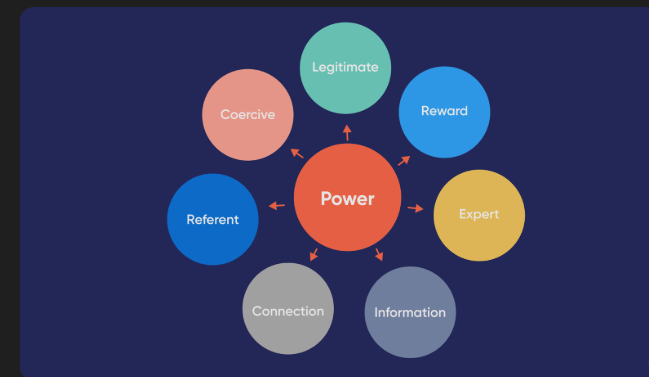
1. Defining Power: What Rankings Leave Out
Standard university rankings rely heavily on specific metrics like faculty-to-student ratios, citation counts, and international student percentages. While these numbers offer a helpful baseline, they completely miss the concept of structural power.
also http://Top Colleges for ROI Beyond Prestige | PPRO EED posted …
The most powerful universities possess an intangible, undeniable influence that dictates the flow of global business, technology, and governance. This type of power manifests in several ways:
- Political and Economic Influence: Some institutions serve as direct pipelines to world leadership, central banks, and international courts.
- Market-Shifting Research: When a breakthrough happens at one of the most powerful universities, it doesn’t just stay in an academic journalit launches multi-billion dollar industries.
- Cultural Dominance: The ideas, philosophies, and societal trends debated on these campuses today become the mainstream cultural narratives of tomorrow.
By evaluating a school through the lens of tangible influence rather than a numeric rank, you open the door to finding an institution that aligns with your grandest career ambitions.
2. The Pillars of a Truly Powerful University
To look beyond the rankings effectively, you need a new framework for evaluation. If numbers don’t tell the whole story, what does? Truly dominant institutions are built on three distinct pillars of global influence.
The Global Alumni Network (The “Hidden Hand”)
A university’s power is actively carried out through its alumni. The most powerful universities cultivate networks that function like exclusive, lifelong clubs. Having an alumnus from your alma mater in an executive suite or a government ministry gives you an immediate, distinct advantage that no high ranking score can replicate. It is about access, trust, and a shared pedigree that opens doors globally.
Industry Integration and Funding
An institution’s financial ecosystem dictates its strength. Look closely at corporate partnerships, venture capital pipelines, and patent creation. The most powerful universities act as central hubs for massive financial ecosystems, ensuring their students have direct access to cutting-edge tech, heavily funded startups, and top-tier global internships before they even graduate.
Venture Capital Disruption
Consider how many venture-backed startups trace their origins back to a university’s labs or dorm rooms. Silicon Valley, Boston’s biotech corridor, and Bangalore’s tech hubs are completely powered by neighboring elite institutions. This entrepreneurial ecosystem is a key trait found within the most powerful universities.
3. How to Find Your Perfect Match Beyond the Rankings
Now that you know what structural power looks like, how do you find the specific campus that fits your personal goals? The key is matching your individual career trajectory with an institution’s distinct area of global dominance.
[Define Personal Goals] ➔ [Identify Institutional Strength] ➔ [Evaluate Cultural/Geographic Fit]
Step 1: Identify Your Target Ecosystem
Are you looking to break into Wall Street finance, Silicon Valley tech, global public policy, or cutting-edge biomedical research? Different institutions hold different types of power. A school that ranks 15 overall globally might actually be the undisputed 1 powerhouse for your exact target industry.most powerful universities.
Step 2: Evaluate the “Proximity Factor”
Power is deeply geographic. Look at where a university is positioned. An institution embedded in a major economic or political capital naturally wields massive local and international influence. This geographic proximity gives you a massive advantage for networking, internships, and post-grad hiring.
Step 3: Assess the Cultural Alignment
A university can be incredibly influential, but if its campus culture stifles your personal growth, it is not your perfect match. Some of the most powerful universities thrive on intense, hypercompetitive environments, while others foster collaborative, multidisciplinary, and creative ecosystems. Choose the environment where you will personally thrive.
4. The ROI of Institutional Strength vs. Rank Prestige

Let’s look at the financial reality. Elite education is a massive financial investment. When assessing the return on investment (ROI), looking strictly at rankings can be incredibly misleading. A school’s rank might fluctuate year over year based on changing methodologies, but its institutional power remains incredibly stable.
Graduating from one of the most powerful universities gives you a form of professional insurance. Even during economic downturns, top-tier global employers consistently return to the exact same talent pools. The prestige, network, and institutional backing act as a career accelerator, helping you command higher starting salaries and achieve rapid upward mobility.
Conclusion
At the end of the day, university rankings are just a single tool in a massive toolbox. They offer a static snapshot of data, but they fail to capture the dynamic, living breathing impact of an institution. Finding your ideal fit requires looking beyond the numbers to identify the most powerful universities that align perfectly with your unique passions, industry goals, and cultural preferences. Focus on the network, the industry integration, and the real-world influence—because that is where your true potential will be unlocked.most powerful universities.
Frequently Asked Questions (FAQs)
1. Why should I look at the most powerful universities instead of just relying on standard ranking lists?
Standard rankings use rigid formulas that change frequently and often prioritize academic citations over real-world opportunities. Focusing on the most powerful universities helps you evaluate an institution’s actual industry networks, global influence, and career-launching capabilities, which matter far more for your long-term professional success.
2. Can a lower-ranked university still be considered one of the world’s most powerful universities?
Absolutely. A university might be ranked lower overall due to a lack of specific medical or science research departments, yet remain an absolute powerhouse in fields like business, law, or political science. Structural power is about industry dominance and global networks, not just an average combined score.
3. How does the alumni network of a powerful university impact my career?
An elite alumni network acts as an exclusive global community. Graduates from powerful institutions tend to hire, mentor, and fund fellow alumni. This gives you direct, high-trust access to competitive industries, hidden job markets, and venture capital opportunities that are rarely available through standard application channels.
4. What role does geography play in making a university powerful?
Geography is incredibly important. Universities located within or near major global hubs—such as financial centers, technology corridors, or political capitals—benefit from deep corporate and governmental integration. This proximity provides students with unmatched internship access, industry guest lecturers, and direct local hiring pipelines.
5. How can I assess a university’s industry power before applying?
Look closely at the university’s corporate partnerships, the volume of patents filed, the amount of venture capital funding raised by its alumni, and the specific companies that actively recruit on campus. A strong presence in these areas indicates a high level of real-world institutional power.